
Virtual Casinos Are Innovative Way To Improve Online Gambling

Introduction

Virtual reality has already become quite popular among gamblers and has all the chances to develop this success.

For example, Jeff Lende, Lucky VR Casino Founder, claims that virtual reality has a potential to become massive in gambling.

“In my opinion, there’s no doubt that eventually virtual reality will be the way the vast majority of people play online casinos. Mobile VR headsets are already very affordable and many are being given away free, like the Samsung Gear VR which is bundled with the new S7 smartphone.  Mobile VR will definitely be a mass market product before high end VR and will act as a great acquisition tool for high end VR with people getting their first taste of VR using mobile”.  

This opinion is confirmed by this report: in 2020, VR gambling market size was estimated at US$10.4 Billion аnd is projected to reach US$44.1 Billion by 2027. 

AR/VR Apps development

What Virtual Reality Casino is

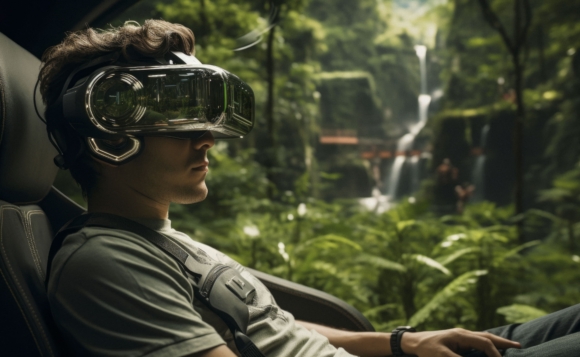
Virtual casino is a type of online casino, which is designed in digital reality for VR headset. Virtual casinos allow gamblers with VR headsets to immerse in virtual space, which recreates the real casino and its atmosphere to the smallest detail. It’s all happening in real time, and gamers from around the world can become a user’s rivals. 

There are some functions available for a gambler in virtual casino, including:

  • realistic slot machines;
  • virtual poker and other board games, where you can play with chips;
  • a possibility to communicate with other players using avatars; 
  • a possibility to see hand gestures and body movements:
  • sounds of real casino add up to an immersive experience.

Do You Have to Pay in VR Casino

There are two types of VR casino:  apps, where you can win real money, and virtual experiences, where you have no possibility to win jackpot. But some apps give a gambler a possibility to communicate with other people in virtual environment, which recreates real gambling institution atmosphere.

Social and Free VR Casinos

Social Club VR: Casino Nights is considered to be the one of the most popular free social VR casinos. In this app, you can interact with other players, using customized avatars, and choose any game you like: blackjack, poker, roulette, Texas Holdem, etc.

Poker Stars VR, released in 2018, offers gamblers a possibility to play their favorite poker in a virtual reality. The latest version of the VR app contains an update Casino One, where users can gamble in different locations, including Las-Vegas, Medieval castle, futuristic casino, Western saloon, etc. While gambling, users can also have some virtual snacks or cocktails,  and make selfies. 

Blackjack Bailey is a one-player casino, where you can compete with virtual dealer, but the main purpose of the mobile VR app is training blackjack skills. After playing the game,  you can surprise your real rivals with the improved gambling skills.

Real-Money VR Casinos

SlotsMillion VR casino, released in 2015 for outdated VR headset Oculus Rift, is considered to be the very first casino in virtual reality. SlotsMillion VR contains more than 40 slots,  including Dracula, Gonzo’s Quest, Jack Hammer, Scarface, Starburst, and many more.

Technically, Online Casino Apps isn’t a full-fledged VR casino. This app allows players to get acquainted with an interactive map and walk through virtual streets of a night city, where different real-money casino are located.  

Conclusion

Virtual reality opens new possibilities for gambling. Experts of the field and researches can prove that VR has all the chances to become very successful in gambling. And there’s a proper explanation of it. In maximally realistic virtual world, you can play popular casino games and interact with other participants around the world.

Latest Articles
Immersive Storytelling: How XR Turns Audiences from Viewers into Participants
June 8, 2026
Immersive Storytelling: How XR Turns Audiences from Viewers into Participants

Immersive storytelling has moved from experimental format to a working tool used by humanitarian agencies, museums, newsrooms, and brands. The UN commissions 360° productions to communicate field realities. Agog is funding up to $1 million in 2026 grants for immersive climate work. Museums build location-based AR around their collections. Brands replace banner-grade content with VR experiences their audiences actually remember. What unites these use cases is a shift in what audiences expect from a story. Watching is no longer enough. People want to step into the scene, choose where to look, and feel that their presence shapes what happens next. The market reflects this shift. Fortune Business Insights projects the immersive marketing segment alone to grow from $11.66 billion in 2026 to $89.45 billion by 2034, at a CAGR of around 29%. In this article, we look at what immersive storytelling actually means in 2026, the formats producing the strongest results today, why presence works the way it does on a cognitive level, and where the medium is creating the most measurable impact across sectors. What is immersive storytelling? Immersive storytelling is a narrative method built on VR, AR, MR, 360° video, spatial audio, and interactivity. What makes it a distinct medium is the sense of being inside a story rather than watching it from outside. This changes the relationship between content and viewer in three concrete ways. Linear video becomes a 360° scene. Traditional film frames the shot for the audience: the director decides what is in view and what is cut out. In a 360° production, that frame disappears. The viewer chooses where to look, and different details emerge depending on where their attention goes. The same scene can carry multiple parallel observations, and two people watching the same piece may come away with different impressions of what mattered. Text and photography become interactive environments. A written article describes a place; a photo captures a moment of it. Both keep the audience on the outside. Interactive VR and AR let the audience step into the environment, examine objects up close, and in many cases trigger responses through their own actions. Passive consumption becomes an embodied experience. Watching content engages mostly the eyes and ears. Immersive formats add spatial awareness, proprioception, and a sense of physical location. The brain registers the experience closer to how it registers being somewhere in the real world, which is why retention and emotional response measure differently in immersive media than in flat content. How far the experience goes in any of these directions depends on the creative approach. Why it works: The science of presence and empathy When immersive storytelling produces results, it does so through specific mechanisms. The effect it has on audiences has been documented in peer-reviewed research and confirmed by neuroscience. A peer-reviewed study on immersive storytelling and presence found that delivering a story via 360° video on a head-mounted display produces stronger self-location and copresence than the desktop or text version of the same piece. Self-location is the feeling of being physically inside the scene; copresence is the sense of being there with other people. Both have a direct effect on how audiences respond emotionally. Copresence boosts cognitive empathy—the ability to understand what someone else is going through. Self-location and copresence together drive affective empathy—the capacity to share in those feelings. The format is changing what the audience is neurologically equipped to feel. Neuroscience confirms the difference at the signal level. EEG studies comparing VR with television viewing have documented greater mu rhythm suppression during VR sessions—a neural signature long associated with empathic response and mirror neuron activity. The brain registers immersive content differently from flat content. It shows up on EEG equipment, independently of what the audience reports feeling. These findings explain why immersive storytelling is being adopted in fields where emotional connection and behavioral change actually matter: humanitarian communication, climate advocacy, public health, education. But the effect is not automatic. Presence on its own is just immersion. Real emotional and behavioral impact comes from the combination of presence, intentional narrative design, and ethical representation of the subject. Without the second and third, the first is a novelty. Core formats There are five core formats producing immersive storytelling today. They differ in how they are built, how they reach the audience, and what kind of story they can carry. The choice between them is usually the first practical decision in any project. 360° video is the lowest barrier to entry. It is filmed, not built, using specialized cameras that capture the full surrounding scene, which the viewer then explores by turning their head. Production logic is closer to documentary filmmaking than to game development, which makes it accessible to teams already working in video. It is the strongest fit for documentary, fundraising, brand stories, and any project where the goal is to transport the audience into a real place. It is also the most common entry point for organizations producing their first immersive piece. Interactive VR experiences are fully built in engines like Unity or Unreal. Unlike 360° video, the environment is constructed rather than filmed, which means the audience can move through it, interact with objects, and trigger branching narratives. VR development is closer to game development than to film, with longer timelines and higher budgets, but the payoff is depth: the audience can spend hours inside a well-built VR experience and keep finding new layers. This format is the strongest fit for education, simulation, and brand experiences where engagement time matters more than reach. AR experiences anchor digital content to physical locations or objects, delivered through smartphones or smart glasses. The audience stays in the real world and sees a layer of story added on top of it. This makes AR and MR development especially valuable when the physical context is part of the message: a museum exhibit that comes alive when viewed through a phone, a historical site that reconstructs itself on screen, a product that reveals its inner workings when scanned. AR works…

From Pain Relief to Rehabilitation: A Portrait of VR Therapeutics in 2026
May 27, 2026
From Pain Relief to Rehabilitation: A Portrait of VR Therapeutics in 2026

VR therapeutics is becoming a real category of reimbursable medicine. It now has FDA authorization pathways, dedicated billing codes, and growing support from commercial insurers. This shift didn’t happen overnight. It has built up over several years through a series of regulatory, clinical, and commercial milestones that together make 2026 a turning point for the industry. The market is starting to reflect that. Estimates vary by methodology, but SNS Insider projects the broader VR healthcare market to grow from $4.27B in 2024 to $46.4B by 2032 (a 33% CAGR). VR telerehabilitation alone is projected to grow from $1.2B in 2026 to $2.67B by 2030, a 22% CAGR that captures the segment this article focuses on. Three moments tell the story of how we got here. 2021: The first prescription VR therapy gets FDA cleared. AppliedVR’s RelieVRx became the first VR product authorized as a prescription medical device in the US. 2023: Medicare opens the reimbursement door. Centers for Medicare and Medicaid Services created the first VR-specific billing code, placing prescription VR into the Durable Medical Equipment category. The practical effect: doctors gained a way to prescribe VR therapy, and insurers gained a code to pay against. 2025: Commercial insurers begin following Medicare’s lead. In September, Cigna became one of the first major commercial payers to cover FDA-approved digital therapeutics. In this article, we’ll walk through six therapeutic domains where that infrastructure is taking shape. Each has its own clinical logic, its own leading players, and its own path to scale.  Market architecture Before we walk through the six therapeutic domains, it’s worth understanding the shape of the market they sit inside: what’s growing, where the money is concentrated, and what changed structurally between 2023 and 2025 to make any of this viable. Where therapy and rehab sits inside VR healthcare VR healthcare as a whole spans everything from surgical training simulators to anatomical education tools. But within that broader market, VR therapeutics and rehabilitation is the fastest-growing application segment, and it’s also where regulatory and reimbursement infrastructure is forming most actively. Inside therapy-and-rehab itself, two sub-segments are consistently identified by independent market research as the fastest-growing: pain management and mental health therapy. Both have something the other categories don’t yet: FDA-cleared products in the market, peer-reviewed efficacy data, and at least nascent reimbursement pathways. Geographically, the market is concentrated in two regions for very different reasons. North America is leading adoption mainly because the FDA has started approving prescription VR therapies, and dedicated billing codes now allow healthcare providers to get reimbursed for using them. Europe is catching up via different infrastructure, particularly Germany’s DiGA framework, which provides a parallel route to physician prescription and statutory health insurance coverage. France’s PECAN and the UK’s DTAC are developing in a similar direction. The pattern is clear: once regulators create a formal pathway, companies and investment tend to follow. What the hardware cycle unlocked The clinical use cases for VR therapy didn’t really change between 2020 and 2025. What changed is that the hardware finally became viable for the business models the clinical work demanded. Consumer-grade standalone headsets brought the price floor down to where at-home prescription models work. Meta Quest 3, Meta Quest 3S, and Pico 4 helped bring standalone VR headsets to more affordable consumer price levels—an important step for prescription VR therapies that patients are expected to use at home. RelieVRx, for example, is a self-administered program delivered to patients in their living rooms; that model is described in detail in MDIC’s case study of the product. Major headset manufacturers are doubling down on healthcare partnerships rather than building healthcare-specific hardware. A useful signal here is HTC VIVE’s April 2025 expansion with Mynd Immersive, Select Rehabilitation, and AT&T into more than 150 US senior living communities—the largest deployment of immersive therapeutics into senior care to date. The interesting strategic detail isn’t the size of the rollout but its structure: a hardware OEM (HTC), a content/care platform (Mynd), a clinical services partner (Select Rehab), and a connectivity provider (AT&T). That’s the four-party stack that scaled clinical VR is going to require, and partnerships like this one are essentially templates that the rest of the industry will be copying. Body: pain & physical rehab 1. Pain management Pain is the single largest unmet need in clinical medicine. In the United States alone, roughly 50 million adults live with chronic pain, and the toolkit physicians have to treat it is uncomfortably narrow: opioids carry addiction risk, non-opioid pharmaceuticals are inconsistently effective, and behavioral therapies are scarce and slow. Procedural pain is its own category, often managed with anesthesia or sedation, which adds cost, risk, and recovery time. This is the gap VR fills. The clinical evidence for VR as a pain intervention rests on two well-documented neurological mechanisms. The first is gate control theory: pain signals traveling up the spinal cord compete with other sensory inputs for processing capacity, and immersive visual and auditory stimulation can effectively crowd them out before they reach the brain as pain. The second is cognitive load: a fully immersive VR experience occupies enough of that capacity to leave less available for processing pain as pain. Together, these mechanisms make VR more than just a distraction. They turn it into a real neurological intervention, which helps explain why VR can reduce pain in clinical settings where simpler distractions like music or conversation often cannot. There are two distinct applications emerging from this. The first is procedural pain, where Medtronic provides the clearest commercial example. Medtronic’s VR solution makes office hysteroscopy more comfortable by immersing the patient in a virtual environment during the procedure. According to Medtronic, the immersive sedation-analgesia content reduces patient anxiety and decreases pain-related brain activity. The second application is chronic pain. RelieVRx, which we talked about above, is a shining example, receiving Breakthrough Device Designation and De Novo authorization specifically for chronic lower back pain. A regulatory pathway the AppliedVR team has documented in detail in the peer-reviewed literature. The clinical data behind…

Digital Twins for Digital Transformation Strategy in the Industrial Sector
April 22, 2026
Digital Twins for Industry 5.0 Transformation Strategy

Industrial digital transformation is no longer just about automation or collecting data. More and more, it comes down to having a live, accurate digital representation of what is actually happening across physical operations. That is what a digital twin does: it creates a virtual model of a machine, a production line, or an entire facility, and keeps it synchronized with real-world data in real time. This makes it more than a visualization tool. It becomes a working instrument for a variety of industrial applications: simulations, predictive maintenance, monitoring and analytics, process and operational optimization, quality control, worker enablement, EHS solutions, and faster decision-making. Industrial Extended Reality (XR) and immersive technologies are entering their second wave of adoption. While the first wave was shaped mainly by experimentation with XR, the current stage is enabled by mature hardware and significantly stronger digital capabilities, allowing organizations to realize the true value of VR and AR in practical, scalable ways. In parallel, digital transformation is shifting from the automation-led, low-human-involvement logic of Industry 4.0 toward a human-centric model built on human-machine collaboration and co-piloting in Industry 5.0. Industry is adopting Extended Reality (XR) faster than any other sector. Manufacturing and industrial operations accounted for 35.1% of the global digital twin market in 2025. More than half of companies using digital twins report profitability increases of over 20%, and Gartner predicts that by 2027, 40% of large industrial companies will use the technology, resulting in increased revenue. The market overall is projected to grow from $49.2 billion in 2026 to $228.46 billion by 2031. These numbers show that digital twins become a core part of how industrial companies compete and operate. In this article, we look at the specific areas where digital twins create the most value in the industrial sector today, walk through real-world cases from companies already using them at scale, and discuss where the technology is headed next. Why Digital Twins are more than virtual models The role of digital twins has broadened significantly, now covering simulation, planning, operations, and essential 3D visualization needs. As a strategic capability, the digital twin helps organizations understand the present state of assets and systems, anticipate what comes next, and make more precise, informed decisions. This is what separates them from the technologies they are often confused with. A 3D model is static and disconnected from physical reality. A simulation runs defined scenarios but doesn’t update as circumstances change. BIM captures asset properties at a point in time—valuable, but not dynamic. A digital twin does all three, continuously. Let’s look at how this works from a technological perspective. The technology stack behind the intelligence Within the virtual model, three interconnected layers work together.  The first is the data storage and processing layer, responsible for ingesting, organizing, and structuring incoming data streams. IoT sensors and edge devices form the foundation of data acquisition, continuously capturing physical parameters: temperature, vibration, pressure, energy consumption, throughput. This data moves through real-time pipelines into processing environments. The second is the analytics and AI layer, which interprets this data by detecting anomalies, identifying patterns, generating forecasts, and providing recommendations to guide operational decisions.  The third is the visualization and interface layer, translating these insights into clear, actionable formats: dashboards, alerts, or interactive simulations, that engineers, operators, and executives can easily use. A digital twin also integrates with the broader enterprise ecosystem, including engineering documentation, GIS platforms, maintenance systems, financial tools, and business networks. The result is a closed loop of intelligence. Physical reality continuously updates the virtual mode → the model generates insights → and those insights guide decisions that impact the physical system. Types of digital twins Depending on the level of detail and the specific operational goals, a digital twin can focus on a single component, a complete asset, an entire system, or even a full process. Recognizing these distinctions helps organizations select the right model for each use case. A component twin represents a single element (a pump, a bearing, a sensor) and is primarily used for granular condition monitoring and early failure detection.  An asset twin integrates multiple components into a unified model of a complete physical asset, such as a machine or a turbine, enabling a more comprehensive view of performance and interdependencies.  A system twin extends this further, representing how multiple assets interact within a broader operational environment (a production line, a power grid, or a supply chain node).  A process twin models entire workflows and decision sequences, making it possible to trace how disruptions, inefficiencies, or interventions propagate across an organization. In real-world deployments, these levels are layered: component twins feed into asset twins, which feed into system and process twins. This nested setup mirrors actual operational complexity and enables insights at any level, from individual parts to entire workflows. Where digital twins create the most industrial value Below, we break down the use cases where digital twins are generating the most value in the industrial sector today. Predictive maintenance and asset reliability Unplanned equipment downtime remains one of the most costly scenarios for any industrial enterprise. When a critical asset fails unexpectedly, the company loses not only on repairs but also on production chain disruptions, logistical failures, and reputational risks. This is why predictive maintenance powered by digital twins has become one of the most mature and economically justified applications of the technology. The traditional approach to maintenance operates on two models: reactive (repair after failure) or scheduled preventive (servicing on a fixed schedule, regardless of the actual condition of the equipment). Both models are inefficient. The first leads to emergency shutdowns, while the second results in excessive spending on servicing components that still have significant remaining life. The digital twin changes this paradigm. It creates a virtual copy of a physical asset that continuously receives sensor data and updates in real time. Through machine learning algorithms, the system analyzes wear patterns, compares current conditions against historical data, and predicts the moment when a component will reach a critical state. This enables maintenance to…


Let's discuss your ideas

Contact us