VR therapeutics is becoming a real category of reimbursable medicine. It now has FDA authorization pathways, dedicated billing codes, and growing support from commercial insurers. This shift didn’t happen overnight. It has built up over several years through a series of regulatory, clinical, and commercial milestones that together make 2026 a turning point for the industry.
The market is starting to reflect that. Estimates vary by methodology, but SNS Insider projects the broader VR healthcare market to grow from $4.27B in 2024 to $46.4B by 2032 (a 33% CAGR). VR telerehabilitation alone is projected to grow from $1.2B in 2026 to $2.67B by 2030, a 22% CAGR that captures the segment this article focuses on.
Three moments tell the story of how we got here.
- 2021: The first prescription VR therapy gets FDA cleared. AppliedVR’s RelieVRx became the first VR product authorized as a prescription medical device in the US.
- 2023: Medicare opens the reimbursement door. Centers for Medicare and Medicaid Services created the first VR-specific billing code, placing prescription VR into the Durable Medical Equipment category. The practical effect: doctors gained a way to prescribe VR therapy, and insurers gained a code to pay against.
- 2025: Commercial insurers begin following Medicare’s lead. In September, Cigna became one of the first major commercial payers to cover FDA-approved digital therapeutics.
In this article, we’ll walk through six therapeutic domains where that infrastructure is taking shape. Each has its own clinical logic, its own leading players, and its own path to scale.
Market architecture
Before we walk through the six therapeutic domains, it’s worth understanding the shape of the market they sit inside: what’s growing, where the money is concentrated, and what changed structurally between 2023 and 2025 to make any of this viable.
Where therapy and rehab sits inside VR healthcare
VR healthcare as a whole spans everything from surgical training simulators to anatomical education tools. But within that broader market, VR therapeutics and rehabilitation is the fastest-growing application segment, and it’s also where regulatory and reimbursement infrastructure is forming most actively. Inside therapy-and-rehab itself, two sub-segments are consistently identified by independent market research as the fastest-growing: pain management and mental health therapy. Both have something the other categories don’t yet: FDA-cleared products in the market, peer-reviewed efficacy data, and at least nascent reimbursement pathways.
Geographically, the market is concentrated in two regions for very different reasons. North America is leading adoption mainly because the FDA has started approving prescription VR therapies, and dedicated billing codes now allow healthcare providers to get reimbursed for using them. Europe is catching up via different infrastructure, particularly Germany’s DiGA framework, which provides a parallel route to physician prescription and statutory health insurance coverage. France’s PECAN and the UK’s DTAC are developing in a similar direction. The pattern is clear: once regulators create a formal pathway, companies and investment tend to follow.
What the hardware cycle unlocked
The clinical use cases for VR therapy didn’t really change between 2020 and 2025. What changed is that the hardware finally became viable for the business models the clinical work demanded.
Consumer-grade standalone headsets brought the price floor down to where at-home prescription models work. Meta Quest 3, Meta Quest 3S, and Pico 4 helped bring standalone VR headsets to more affordable consumer price levels—an important step for prescription VR therapies that patients are expected to use at home. RelieVRx, for example, is a self-administered program delivered to patients in their living rooms; that model is described in detail in MDIC’s case study of the product.
Major headset manufacturers are doubling down on healthcare partnerships rather than building healthcare-specific hardware. A useful signal here is HTC VIVE’s April 2025 expansion with Mynd Immersive, Select Rehabilitation, and AT&T into more than 150 US senior living communities—the largest deployment of immersive therapeutics into senior care to date. The interesting strategic detail isn’t the size of the rollout but its structure: a hardware OEM (HTC), a content/care platform (Mynd), a clinical services partner (Select Rehab), and a connectivity provider (AT&T). That’s the four-party stack that scaled clinical VR is going to require, and partnerships like this one are essentially templates that the rest of the industry will be copying.
Body: pain & physical rehab
1. Pain management
Pain is the single largest unmet need in clinical medicine. In the United States alone, roughly 50 million adults live with chronic pain, and the toolkit physicians have to treat it is uncomfortably narrow: opioids carry addiction risk, non-opioid pharmaceuticals are inconsistently effective, and behavioral therapies are scarce and slow. Procedural pain is its own category, often managed with anesthesia or sedation, which adds cost, risk, and recovery time.
This is the gap VR fills. The clinical evidence for VR as a pain intervention rests on two well-documented neurological mechanisms. The first is gate control theory: pain signals traveling up the spinal cord compete with other sensory inputs for processing capacity, and immersive visual and auditory stimulation can effectively crowd them out before they reach the brain as pain. The second is cognitive load: a fully immersive VR experience occupies enough of that capacity to leave less available for processing pain as pain. Together, these mechanisms make VR more than just a distraction. They turn it into a real neurological intervention, which helps explain why VR can reduce pain in clinical settings where simpler distractions like music or conversation often cannot.
There are two distinct applications emerging from this. The first is procedural pain, where Medtronic provides the clearest commercial example. Medtronic’s VR solution makes office hysteroscopy more comfortable by immersing the patient in a virtual environment during the procedure. According to Medtronic, the immersive sedation-analgesia content reduces patient anxiety and decreases pain-related brain activity.
The second application is chronic pain. RelieVRx, which we talked about above, is a shining example, receiving Breakthrough Device Designation and De Novo authorization specifically for chronic lower back pain. A regulatory pathway the AppliedVR team has documented in detail in the peer-reviewed literature.
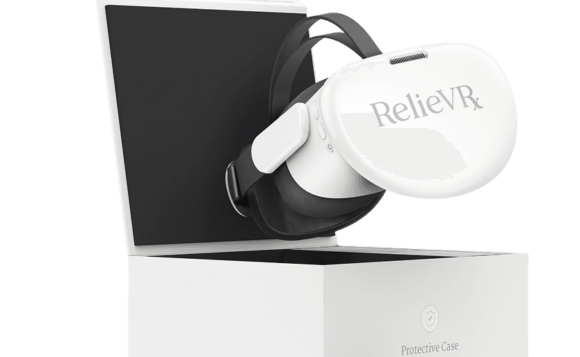
The clinical data behind it is unusually strong for the sector. AppliedVR’s RCT enrolled over 1,000 participants with chronic lower back pain, and the secondary analysis published in late 2024 found that 70% of patients with high-impact chronic pain (the most disabling category) transitioned to low-impact pain by the end of treatment, and 67% maintained that improvement at 12 months. The treatment protocol is modest: about six minutes a day over 56 days, built on CBT principles like pain neuroscience education, body awareness, and cognitive reframing. By the latest disclosures, RelieVRx is in use across 200+ health systems and has reached more than 60,000 patients.
2. Physical rehabilitation
Neuroplasticity, the mechanism by which the brain rewires itself after injury, requires intensive and repetitive exercises (often hundreds of active repetitions per session, sustained over weeks or months). Conventional physiotherapy struggles with both challenges: the exercises are monotonous (which kills patient motivation), and the precise dosimetry of repetitions is difficult to track outside the clinic. The result: patients who could fully recover often stop improving partway through.
Immersive environments can gamify rehabilitation exercises, turning a balance drill into a virtual ski slope, or a reaching task into a fishing expedition, which keeps patients engaged for the volume of repetitions neuroplasticity actually requires. At the same time, the headset and controllers generate precise data on each repetition: range of motion, speed, accuracy, time-on-task. So, a physical therapist can prescribe a clinically-dosed protocol the patient can execute at home, with the therapist reviewing performance data the next day.
Among the more established players in this space is Virtualis, a company that has equipped over 900 clinics and treated more than 1 million patients globally. The company offers four FDA- and CE-certified product lines: PhysioVR for general physical therapy, BalanceVR for vestibular and balance disorders, and StaticVR and MotionVR—force plates integrated with VR for static and dynamic rehabilitation. The clinical scope is broad: traumatology, orthopedics, proprioception, neurology, sports medicine, and vestibular disorders.
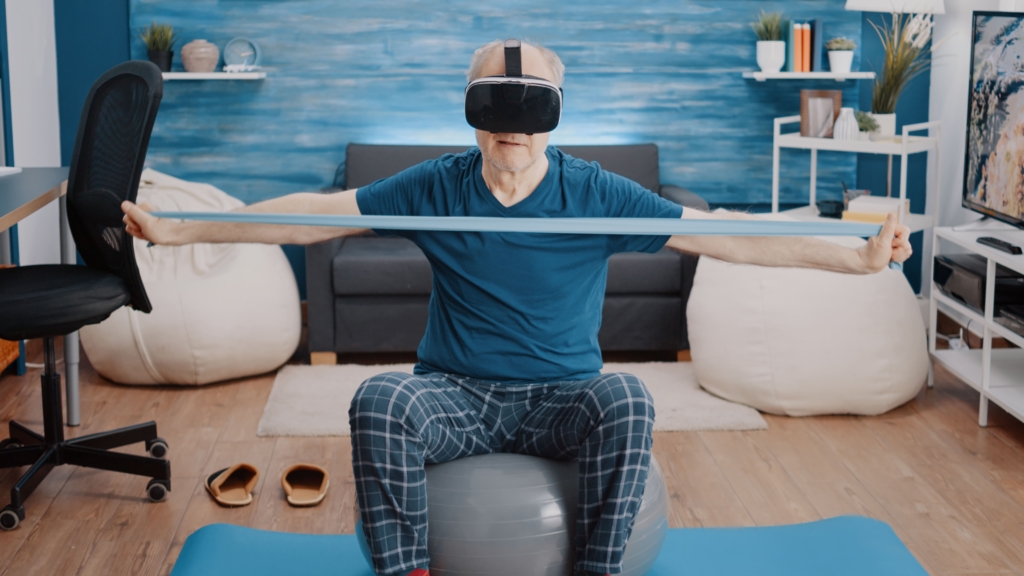
The broader evidence base for VR in physical rehabilitation is substantially stronger than most observers realize. A 2024 meta-analysis published in BMC Medical Informatics and Decision Making synthesized 55 randomized controlled trials covering 2,142 stroke patients and found that VR-based rehabilitation outperformed conventional occupational therapy across five outcome measures: upper limb motor function, functional independence, quality of life, spasticity, and dexterity. Moreover, the researchers found that interventions longer than six weeks produced superior results, and that starting VR within the first six months post-stroke was the optimal window for outcomes.
Mind: mental health, mindfulness and exposure
3. Mindfulness
Major medical institutions now prescribe mindfulness-based stress reduction (MBSR) and mindfulness-based cognitive therapy (MBCT) for conditions ranging from anxiety to chronic pain, and the peer-reviewed evidence base behind these protocols is substantial. The practice has a known adoption problem, though: most people who try meditation quit within weeks, citing difficulty focusing, restlessness, or uncertainty about whether they’re doing it right.
VR addresses this problem. The same immersion that reduces pain perception in clinical VR also crowds out the wandering thoughts and environmental distractions that make ordinary meditation difficult particularly for beginners. A visually engaging immersive environment gives the brain an external anchor that audio-guided meditation lacks.
The leading commercial example is Headspace XR, the VR extension of Headspace—one of the most-used mindfulness apps globally. Headspace XR packages meditation sessions into immersive natural environments: floating through space, walking through forests, sitting on virtual beaches. What’s interesting about Headspace XR is that it’s positioned as a wellness product, not a medical one. It isn’t FDA-cleared, doesn’t make medical claims, and isn’t covered by insurance. That gives it some advantages: fewer regulatory hurdles and a business model that can scale faster directly to consumers. But it also means it can’t be prescribed by doctors or marketed as a clinical treatment.
Mindfulness VR plays a different role in the market. It’s less about treatment and more about getting people comfortable with using VR for mental well-being.
For many users, guided meditation in VR becomes their first experience with this kind of technology. That makes them more open later to VR-based therapies for pain management, rehabilitation, or mental health treatment recommended by a clinician.
So while mindfulness VR is not where the big medical or regulatory breakthroughs are happening, it is helping build broader acceptance of VR in healthcare.
4. Mental health treatments
Mental health is one of the largest unmet clinical needs in the world. The WHO estimates that nearly one billion people globally live with a mental disorder, with anxiety disorders and depression the most common. The treatment gap is severe and unevenly distributed: in low- and middle-income countries, over 75% of people who need mental health care don’t receive any treatment at all; even in high-income countries, roughly two-thirds of cases go untreated. The reasons cluster around the same structural problems: therapists are scarce, sessions are expensive, and stigma keeps people from seeking care.
VR offers something the traditional therapy model can’t easily provide: a private, scalable, low-friction way to deliver evidence-based protocols at home. For categories like specific phobias, where the clinical gold standard is exposure therapy, this is powerful. Real-world exposure is logistically difficult: a therapist can’t easily take a patient with a fear of flying onto an airplane, or expose someone with arachnophobia to a controlled environment full of spiders. VR can. The patient experiences the feared stimulus in a graduated, repeatable, safe context, while the underlying therapeutic mechanism (habituation and cognitive restructuring) works the same way as in-person exposure.
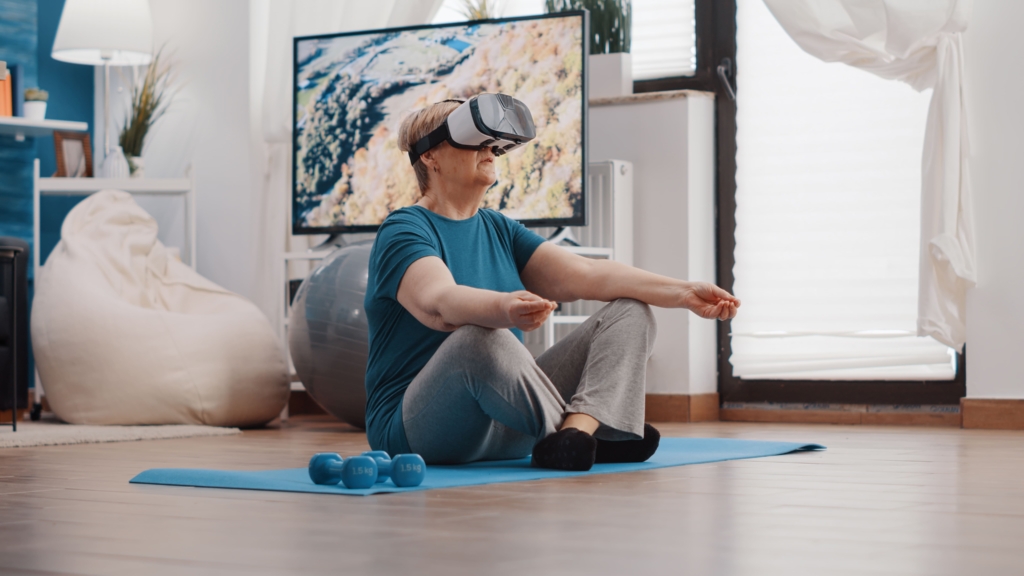
The clearest commercial example in self-administered exposure therapy is oVRcome, offering VR programs for common phobias and anxieties: fear of flying, heights, needles, spiders, public speaking, social anxiety and more. The solution is clinically validated through a published trial at the University of Otago covering 129 subjects across five phobias. oVRcome also offers a parallel B2B clinician portal, allowing therapists to use the VR content in-clinic or assign it as homework.
A widely cited 2007 study by García-Palacios and colleagues, conducted on 150 patients with specific phobias, found that 76% preferred VR exposure over real-world exposure. Refusal rates were also much lower: 3% for VR versus 27% for in-person exposure therapy. The study was relatively small and is now dated, but it is still frequently cited because it highlights a real clinical problem: many patients who could benefit from exposure therapy never begin treatment because the real-world version feels too overwhelming. VR helps lower that barrier.
5. Mental therapeutics for seniors
An aging population is becoming one of healthcare’s biggest long-term challenges. In the United States alone, the number of adults over 65 is expected to reach 82 million by 2050, with similar trends across Europe and East Asia.
Two problems are especially difficult to address in older adults: social isolation and cognitive decline linked to dementia. Both have a major impact on health and quality of life, and traditional geriatric care often struggles to treat them effectively.
Social isolation is often underestimated, even though it has a major effect on health. A large meta-analysis covering more than 300,000 people found that strong social relationships increase the likelihood of survival by 50% (an effect comparable to quitting smoking).
For many seniors in long-term care facilities, isolation is built into daily life. Limited mobility, fewer family visits, and repetitive environments make social engagement difficult. Dementia makes the situation even harder: as cognitive decline progresses, patients often withdraw from activities and may experience more anxiety, agitation, and other behavioral symptoms.
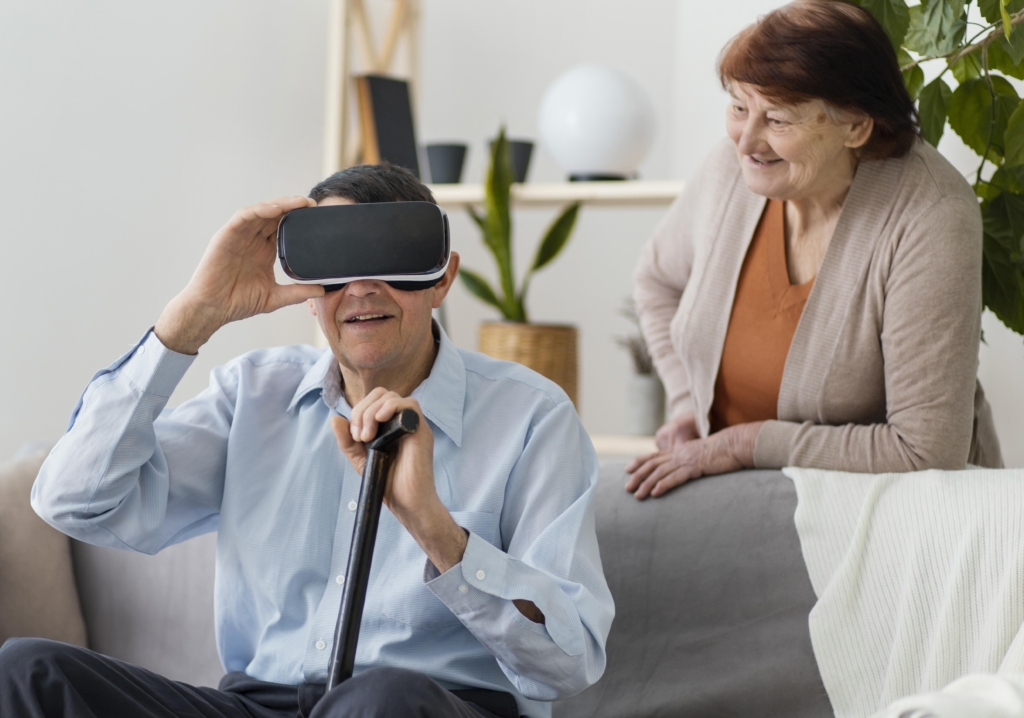
VR addresses both problems through the same mechanism: it transports the patient somewhere else. A person with limited mobility can visit a beach, walk through a forest, or revisit a familiar place from their youth. These VR experiences have been shown to improve mood and engagement. For people with dementia, reminiscence-based VR content can also reduce agitation and encourage more social interaction. VR is not a cure for dementia, but it can meaningfully improve day-to-day quality of life, which is often the most realistic goal at this stage of the disease.
The leading commercial player in this category is MyndVR, which has built a platform specifically for senior living, memory care, and hospice settings. The company supplies headsets pre-loaded with a curated library of immersive content (travel experiences, nature scenes, music, reminiscence content, cognitive games) designed for the specific cognitive and physical limitations of older users. The business model is institutional: senior living operators sign multi-year subscriptions, with monthly content updates and staff-facilitated resident sessions integrated into their care programs.
Brain: cognitive rehab
6. Cognitive rehabilitation
Cognitive rehabilitation focuses on helping people recover mental abilities after brain damage caused by stroke, traumatic brain injury, or early-stage neurodegenerative disease. These abilities include memory, attention, language, processing speed, and decision-making—the skills people rely on in everyday life to manage tasks, follow conversations, organize routines, or live independently.
The clinical mechanism behind recovery is already mentioned neuroplasticity. But cognitive rehabilitation only works when exercises are challenging enough to train the impaired function without becoming so difficult that patients lose motivation. Traditional cognitive rehab usually relies on paper exercises, board games, or therapist-led activities. These approaches can be hard to standardize and often struggle to keep patients engaged. Two patients working on “memory training” with different therapists may end up doing completely different exercises, making progress harder to measure and compare.
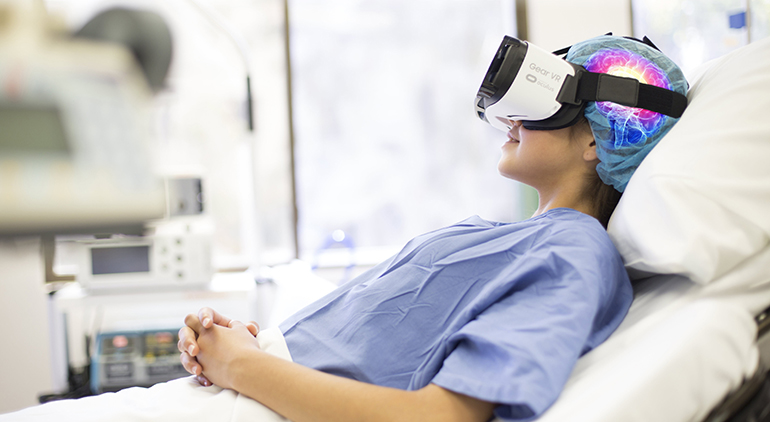
Immersive environments make cognitive exercises feel more natural and engaging. A memory exercise becomes finding hidden objects in a familiar virtual kitchen; an attention task becomes navigating a virtual marketplace while filtering distractions; a language exercise becomes a guided conversation in a simulated café. The clinical content is standardized across patients, while the experience feels personally engaging.
One of the clearest commercial examples in this space is a clinical XR platform offering cognitive training designed for healthcare use. These solutions target key cognitive domains, including memory, attention, processing speed, executive function, and decision-making, through structured XR exercises prescribed by clinicians and completed by patients at home.
The evidence base for VR in cognitive rehabilitation is large but uneven in quality. A 2021 umbrella review published in the Journal of NeuroEngineering and Rehabilitation synthesized 41 meta-analyses on VR neurorehabilitation in stroke, traumatic brain injury, and cerebral palsy. The authors found that much of the available evidence was still considered low quality, and only a small number of studies reached moderate or high quality. Even so, the overall results were consistently positive. Across multiple patient groups, VR showed potential benefits for both cognitive function and daily functioning, with the strongest evidence seen in stroke and acquired brain injury rehabilitation.
The honest read is that cognitive rehab VR is at an earlier maturity stage than pain management VR. The clinical mechanism is well-founded, early outcomes are encouraging, but the field is still waiting for the kind of large, well-designed RCT that AppliedVR did for chronic pain.
Outlook 2026–2028
If the past five years built the regulatory and commercial infrastructure for VR therapeutics, the next two years will test whether that infrastructure can scale. A few specific signals are worth tracking.
- AI personalization is moving from concept to product. By 2028, most FDA-cleared VR therapeutics will likely incorporate some form of AI-driven content personalization or adaptive difficulty. The clinical logic is straightforward: therapy that adapts to the patient’s response curve in real time delivers better outcomes than fixed protocols.
- Cigna’s September 2025 move is the watershed precedent for commercial payers. When a major US insurer like Cigna began covering FDA-approved digital therapeutics, it showed that these products are starting to be treated as real medical care rather than experimental wellness tools. The key question now is whether other insurers follow. If more major payers begin reimbursing prescription VR therapies over the next 12–18 months, the market could move from an early-stage niche into a standard part of healthcare.
- Reimbursement expansion beyond pain management. The biggest commercial challenge for VR therapeutics today is reimbursement. Right now, chronic lower back pain is the only area with a well-established insurance pathway. The next likely candidates based on the strongest clinical evidence so far are PTSD, anxiety disorders, and neurorehabilitation after stroke.
VR therapeutics in 2026 is no longer just an experimental technology. It is becoming a real healthcare category, with FDA-approved products, reimbursement pathways, billing codes, and several distinct areas of use.
The big question over the next two years is which applications will become standard practice first. Chronic pain management is currently leading the way, largely because RelieVRx has already established a model for clinical validation and reimbursement. But some of the biggest opportunities may come from areas that have received less attention so far.
In other words, VR therapeutics is moving from an early frontier into an established market category. And the decisions made over the next 24 months will likely shape who leads the field for the rest of the decade.
Latest Articles