XR Solutions That Improve Business Fields

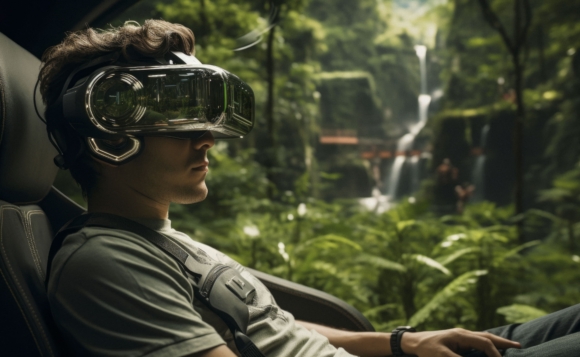
In recent years, the extended reality is gradually becoming popular in different enterprises, including IKEA, BMW, Adidas, etc. In general, modern companies use three main types of XR: virtual, augmented, and mixed reality. 

VR allows a user to immerse themselves in a digital world using a headset. In augmented reality, you can place 3D objects into the physical world. And in mixed reality, there are more possibilities to interact with these objects both in real and virtual space. More detailed information about the difference between VR, AR, and MR you can read here.

Many enterprises which want to apply XR see some perspectives in these technologies. With extended reality, you can improve interaction with customers, provide a more  realistic presentation of an item online and create a safer and more effective working process. According to Statista, the XR B2C (business-to-customer) market size in 2022 is estimated at 25,2 USD billions. 

Industries That Are Affected by XR The Most

Mainly, the extended reality is mostly used in the following fields:

  • Retail;
  • Marketing;
  • Architecture;
  • Show business;
  • Healthcare;
  • Many other fields. 

Sell Your Products With XR

One of the most popular ways to sell items are virtual shops and AR apps that allow trying products before buying. According to statistics by PC Magazine and Statista, 61% of customers said they wanted to visualize their clothes before purchasing. Another 54% of respondents wanted to know how large purchases, like furniture, would look like before buying it. 

There are some fields, where extended reality can be applied in retail.

  • Virtual try-ons. Famous Ukrainian online cosmetic shop Notino designed its own smartphone app, where you can both buy an item and try on its digital version with  “virtual mirror” feature. Using selfie mode on a gadget camera, a user can find out how a shade of lipstick, blushes, eyeshadows, and other cosmetic products will look like.

Speaking about the use of VR by famous retail network. VR Furniture Visualizer by IKEA and XR Labs is the bright example of it. This exhibition is a part of physical shops, where every customer with VR headsets can design their own digital room. At the beginning, a user types in  their contacts, chooses room type and size, and starts customizing it, from walls to furniture and decorative items. VR Furniture Visualizer is available for North Africa and Middle East shops only.

  • Virtual shops. For example, the very first virtual shop was opened in Malaysia. VI-Mall Malaysia allows VR headset users to make virtual shopping in 150 shops, including large grocery store on the first floor. On the second floor, you can visit a digital cinema, where you can buy tickets and watch a movie in a cinema hall. On the third floor, you can see an event hall. A VR headset user can walk between the mall floors, using virtual stairs.

Here you can read more information about XR in retail.

Attract New Customers With XR Marketing

Extended reality allows companies to encourage new and regular customers to their products and services with interesting and non-standard ways. In this case, you can not only create a recognizable brand mascot, but also make it interactive. It can draw attention of your clients and business partners during conferences and presentations.

IT company Wylog designed its own corporate robot-shaped AR mascot in a mobile app. To activate the robot, you should point the camera to the horizontal plane, where you can place the digital model. The robot can walk, jump, hide, and roll into a ball. There’s also a function to change the mascot’s color in the app.

Another way to apply XR in marketing is an interactive virtual advertisement. Adidas used VR experience to promote sports clothes and shoes collection TERREX. Here, in a VR headset user can climb the Delicatessen route and follow famous climbers Delaney Miller and Ben Rueck. The Delicatessen route on Corsica island is considered to be one of the hardest mountain route. With Punta du Corbi peak, the Delicatessen maximal height is almost 1400 meters above the sea. 

A different successful example of VR advertisement is Happy Goggles by McDonalds. It’s a virtual reality headset you can make from Happy Meal package. The goggles have a mobile ski game Slope Stars, released with the support from Sweden National Ski Team. This Happy Meal set had limited-time release in 14 Sweden restaurants.

To celebrate the 30th anniversary of the Happy Meal in Sweden, McDonald’s Sweden has developed Happy Goggles. By re-folding the Happy Meal box, customers can create a pair of virtual-reality glasses which makes it possible to experience virtual reality with a smartphone”, McDonalds said in an official announcement.

XR Makes Building Projection More Comfortable

With the help of tools, provided by XR, you can simplify a building, room, and landscape designing. Also, extended reality gives architects a possibility to create a new project, considering the features of an area. And, with extended reality, you can fix serious issues in the early stages of a project.

Connec2 is a bright example of the virtual platform for architects. It extends a working space with virtual reality headset. In this platform, people interact with the help of digital avatars, that accurately recreate gestures and provide high-quality sound during speaking. Connec2 does not necessarily recreate a physical office. The virtual holodeck is both a place for workers to communicate and a space to thoroughly design a new architectural project.

In addition, there are some successful cases, when architects use augmented reality when they project new buildings. Therefore, with AR, you can consider the features of an area, where you want to build a house, and create more interesting and exciting presentations for colleagues and partners. DOF VR developed an AR app for making building projects and selling real estate. This app can show how a building would look both in the daytime and at night. You can also detach the digital model by layers, and develop and show every detail of the model. Using the gadget screen, the app gives the possibility to project 3D models on real estate magazine pages, on a 2D floor plan of the room, and other surfaces. In addition, using AR app, you can enter a digital version of a room with a smartphone or tablet screen.

Here you can read more about AR in architecture and design.

How To Promote Your Music and Reach Your Fans With XR

With extended reality, any singer or musician can provide an additional immersive experience for their performances and music videos. The more bright and memorable performance is, the more people will pay attention to an artist and their music. 


Katy Perry’s live performance on American Idol is considered to be one of the loudest cases of using extended reality in show business. While she was singing her song Daisies, you could get an impression Perry got into a colorful dimension with moving walls and floating flowers. During the TV broadcast, more than 7 million people saw her performance. On YouTube, Katy Perry’s live version of Daisies reached almost 3 million views.


The live show was created with the help of XR companies PRG Studios and Silent Partners Studio. According to the creators, all the digital elements showed up in real time and reacted to the movement of cameras and the singer herself on stage. The whole performance was filmed on a LED screen stage, interactive 3D projections were superimposed into.
“From a creative perspective, the actual look and feel of the piece was a deceptively difficult effect to achieve”, said JT Rooney of Silent Partners Studios. “The graphics’ solid flat colors and simple textures actually made it difficult to complete the illusion of making the physical LED [backdrops] disappear and magically combine with a virtual environment”. 

Some singers also organize special VR concerts for headset users. This technology is used by famous rapper Post Malone. His exclusive VR performance for Oculus headset users was called Post Malone’s Twelve Carat Toothache. A VR Experience was held on 15 July this year, as a part of his new album promo campaign. 

In addition, some modern pop singers want to support their own fans not with live performances only. For example, Ukrainian IT company Sensorama developed a mobile AR app for famous singer Tina Karol. With this app and smartphone, fans of the artist can sing and dance together with a digital version of their idol. 

Extended Reality Is A Key To Improve Healthcare

Extended reality also simplifies doctors’ work in private and government hospitals. With XR, you can make fast and effective injections (AR device AccuVein, for example), diagnose a patient, and even perform complex surgeries. 

In Brazil, Rio-de-Janeiro, doctors managed to separate three-year-old conjoined twins Bernardo and Arthur Lima with virtual reality. Few months before the surgery, the doctors trialed the techniques, using twins’ digital projections, based on CT and MRI scans. During the surgery, Brazilian specialists, in collaboration with colleagues from Great Ormond Street Hospital in London, worked in the same “virtual reality room”, using VR headsets for more than 27 hours.

In some ways, these operations are considered the hardest of our time, and to do it in virtual reality was just really man-on-Mars stuff”,  said doctor Noor ul Owase Jeelani

Using MR headsets Hololens, specialists can easily diagnose patients, perform surgeries, and teach medical students. Like, for example, they do in Cleveland Clinic.

“So, let’s say that we have a patient on the table, and we want to do some type of intervention. Using augmented reality, we can superimpose data onto that patient, see their CT scan or MRI”, said doctor Karl West, director of Medical Device Development  Department of the clinic. 

“And putting them all together in, integrating them to really come up with this virtual, three-dimensional see-through model”, said Frank Papay, the chairman of the clinic, and doctor of Dermatology and Plastic Surgery Department.

Also, virtual reality can be applied for the rehabilitation of patients, who survived stroke or serious injures. You can find out more about it here.

Extended reality has already found its place in many business fields, including architecture, marketing, healthcare, and retail.  Extended reality provides more possibilities for workers’ training, bringing the audience to your own product, and simplifying the working process while creating new architectural projects. 

Latest Articles
April 2, 2026
Quality and Security You Can Trust, Proven Again: Qualium Renews ISO 27001 and 9001 Certifications

More than 2 years ago, we initiated a focused effort to elevate our security and quality frameworks. Our objective wasn’t just to satisfy standards – it was to make security an integral part of our operations, from daily workflows to strategic decisions. Leading the initiative, Dmytro Stetsenko, Co-founder and CTO at Qualium Systems, stepped up to lead the audit internally, ensuring completion of formal ISO 9001 & 27001 auditor training and reinforcing our internal capabilities. In the months that followed, he partnered with compliance experts and process owners to enhance key operational workflows – from asset management and physical security to HR governance, risk management and business continuity. As Dmytro highlights: “The most significant transformation is in risk awareness. We didn’t just offer new controls, we fundamentally redefined how risks are identified, evaluated and addressed across a company.” Last month we successfully renewed both certifications, involving three-phase audits: an internal review, followed by evaluations from both our ISO 9001 auditor and a dedicated ISO/IEC 27001 audit team, with oversight from an accreditation officer to ensure additional scrutiny. Turning Security into Resilience: How We Built Stronger Quality and Security Frameworks As regulatory pressure intensifies across healthcare, finance and other data-sensitive industries, organizations are expected to demonstrate not only innovation but also measurable control over quality, security, and risk. This year we successfully reaffirmed its compliance with ISO 9001 and ISO/IEC 27001 standards, reinforcing our position as a trusted technology partner operating at the highest levels of operational excellence and information security. As Dmytro Stetsenko explains: “Regulatory pressure from frameworks like DORA and NIS2 continues to grow and compliance is becoming increasingly complex, demanding more resources. Our ISO 27001 certification in particular simplifies that landscape for our clients – reducing audit friction, accelerating approvals, and ensuring a consistently high standard of security.” Global frameworks such as DORA and NIS2 are reshaping expectations around cybersecurity, resilience, and governance. For companies operating in regulated environments, compliance is no longer optional – it is foundational. Qualium Systems ISO certifications provide a structured, internationally recognized framework that directly supports these evolving requirements: ISO/IEC 27001 ensures a mature Information Security Management System (ISMS), safeguarding data confidentiality, integrity, and availability ISO 9001 establishes a robust Quality Management System (QMS), focused on consistency, performance, and continuous improvement Together, these standards create a unified operating model where security and quality are embedded into every process, not treated as separate functions. Coded Harder, Built Better, Run Faster, Secured Stronger: What ISO Means for Everyday Quality and Security Rather than treating certification as a one-time milestone, Qualium Systems approaches ISO standards as a continuous discipline. The 2026 renewal reflects a deeper evolution of internal systems, including: ● Advanced risk management practices integrated across delivery, infrastructure, and operations ● Role-based access controls and data governance models aligned with modern security expectations ● Enhanced business continuity and resilience planning, ensuring stability under disruption ● Process optimization frameworks that improve delivery speed without compromising quality This systemic approach allows clients to operate with greater confidence, reducing audit friction, accelerating approvals, and ensuring readiness for increasingly complex regulatory environments. What It Means for our Clients For organizations in healthcare, fintech, and other compliance-driven sectors, working with a certified partner is no longer a preference — it is a requirement. Qualium Systems ISO 9001 and ISO/IEC 27001 certifications translate into tangible business value: ● Reduced compliance burden across regulatory frameworks ● Lower operational and cybersecurity risk exposure ● Predictable, high-quality delivery outcomes ● Faster alignment with enterprise procurement and audit requirements In practice, this means clients can focus on innovation and growth – while relying on a partner whose processes are already aligned with global best practices. What Comes Next: Beyond Compliance The 2026 certification milestone is not an endpoint, but part of a broader strategy to continuously elevate standards across delivery. As regulatory expectations continue to evolve, we are actively expanding our compliance framework to better support clients in highly regulated industries, particularly healthcare. This includes advancing our alignment with GDPR requirements and progressing toward HIPAA readiness, further strengthening our ability to manage sensitive data in complex regulatory environments. By combining deep technical expertise with certified operational frameworks, the company continues to bridge the gap between cutting-edge technology and enterprise-grade reliability. As Dmytro notes: “This certification reflects our long-term commitment to helping clients navigate the most demanding regulatory environments with confidence. While we continue to expand our compliance capabilities, advancing toward GDPR and HIPAA readiness for healthcare-focused solutions.”

How Extended Reality Is Reshaping Modern Marketing
March 31, 2026
How Extended Reality Is Reshaping Modern Marketing

The global extended reality market (including VR, AR and MR) is expected to reach $84.86 billion by 2029, growing at an estimated annual rate of 28%. But the bigger point isn’t just that the market is expanding, it’s that XR is already proving its value in the places marketers care about most: engagement, conversion, and customer confidence. In ecommerce, interacting with products via AR leads to a 94% higher conversion rate compared to products without AR. That makes sense: when people can better understand what they’re buying, they’re more likely to move forward and less likely to regret the purchase later.  XR also gives brands something that’s getting harder to win online: attention. VR campaigns generate about 46% higher engagement than traditional digital campaigns. People who interact with AR content spend around 2.7 times longer on product pages.  XR is now showing up in real results. That is why marketing is moving beyond static content toward immersive experiences. In the following sections, we will share how these technologies can be applied to marketing strategies and explore what the future of immersive experiences might look like. How XR is transforming modern marketing: 4 use cases that prove it works With XR, businesses can turn traditional campaigns into fully immersive experiences, where customers can explore products, interact with brands, and connect with content in memorable ways. Its value goes far beyond visual appeal, directly impacting the business growth and customer journey itself. And while this may not be immediately obvious, XR can also save significant resources, reducing the need for physical prototypes, showrooms, or large-scale events, making marketing more efficient. This is why more businesses are integrating immersive technologies into their marketing strategies, even despite certain challenges, such as development and VR hardware costs, as well as complex technology integration. Below, we highlight several successful use cases of immersive technologies in marketing. Virtual try-ons One of the most persistent barriers to online purchasing is uncertainty. Will these glasses suit my face shape? Will this sofa fit in my living room? Will this shade of lipstick actually complement my skin tone? These are questions that traditionally required a physical store visit. Virtual try-on eliminates that leap entirely. The technology behind this falls into a few distinct forms. The most accessible is smartphone-based AR. Customers point their phone at themselves or their surroundings, and the app overlays a true-to-scale digital product in real time. A striking example is the FindYourGlasses app developed by Qualium Systems. A step further are dedicated AR headsets and glasses, which immerse the customer in a mixed-reality environment where products can be explored in even greater depth and spatial accuracy.  These technologies help customers understand what they are buying before making a purchase, enabling them to make decisions based on accurate, personalized visualization rather than guesswork. Real-world example: IKEA Place AR App IKEA Place AR app lets shoppers visualize furniture in their own physical spaces before buying. Customers simply point their phone camera at a room, select a piece of furniture, and see it rendered in realistic scale within their actual environment. This removes the biggest friction point in furniture shopping: not knowing whether a sofa or shelf will actually fit or match the existing interior design. Results: After launch, the app was downloaded millions of times and became one of the most widely adopted retail AR experiences globally. IKEA reported increased customer engagement and reduced returns because customers could see how items fit before purchase. The company reported also that customers who use the IKEA Place app are 11% more likely to complete a purchase compared to those who do not use the app. Virtual showrooms & Tours Some purchases simply feel too significant to make without experiencing the space or context first. Traditionally, that meant showing up in person. Virtual showrooms and immersive tours remove that requirement. The technology here ranges from 360° web-based tours (viewable in any browser without additional hardware) to fully immersive VR experiences delivered through headsets. Visitors can walk through a branded space, interact with products, and access information on demand, without leaving their couch or office. Automotive brands use virtual showrooms to let buyers explore vehicle interiors, switch trims and colors, and get a feel for the cabin before visiting a dealership. Real estate platforms offer immersive property walkthroughs that let buyers shortlist homes remotely. Hotels and resorts use virtual tours to sell the experience upfront.  The value is especially pronounced in the machinery and heavy equipment sector, where physically demonstrating a product has always been costly: shipping industrial equipment to trade shows, organizing on-site demos, and flying prospects to manufacturing facilities all consume significant budgets. VR removes that overhead entirely: a potential buyer can step inside a virtual factory floor, operate a machine in a simulated environment, and evaluate complex equipment in full detail. Real-world example: Virtual showroom for MAKEEN Energy industrial equipment MAKEEN Energy, a global corporation delivering industrial gas solutions and heavy infrastructure equipment, built a true-to-scale virtual showroom. Using 3D models of their equipment in a virtual environment, they were able to pack their sprawling machinery into a portable VR headset and bring it to any trade fair.  Results: By no longer shipping heavy equipment around the world and reducing travel with virtual product demonstrations, MAKEEN Energy was able to cut logistics costs significantly. The virtual showroom also accelerated complex, multi-stakeholder sales by giving engineers, technicians, and purchase managers across different countries a shared, detailed view of the product. What began as a trade fair tool evolved into a company-wide asset for sales, training, and communications. For industrial businesses looking to adopt XR, Qualium Systems serves as a trusted technology partner, delivering VR and Web3D solutions that simplify the presentation of complex equipment, enhance product understanding, and support more effective digital engagement. Immersive brand storytelling XR gives brands the ability to place customers at the center of a narrative, transforming passive content consumption into a first-person experience that is far harder to forget. A VR film or AR…

September 10, 2025
Immersive Technology & AI for Surgical Intelligence – Going Beyond Visualization

Immersive XR Tech and Artificial Intelligence are advancing MedTech beyond cautious incremental change to an era where data-driven intelligence transforms healthcare. This is especially relevant in the operating room — the most complex and high-stakes environment, where precision, advanced skills, and accurate, real-time data are essential. Incremental Change in Healthcare is No Longer an Option Even in a reality transformed by digital medicine, many operating rooms still feel stuck in an analog past, and while everything outside the OR has moved ahead, transformation has been slow and piecemeal inside it. This lag is more pronounced in complex, demanding surgeries, but immersive technologies convert flat, two-dimensional MRI and CT scans into interactive 3D visualizations. Surgeons now have clearer spatial insight as they work, which reduces the risk of unexpected complications and supports better overall results. Yet, healthcare overall has changed only gradually, although progress has been made over the course of decades. Measures such as reducing fraud, rolling out EMR, and updating clinical guidelines have had limited success in controlling costs and closing quality gaps. For example, the U.S. continues to spend more than other similarly developed countries. Everything calls for a fundamental rethinking of how healthcare is structured and delivered. Can our healthcare systems handle 313M+ surgeries a year? Over 313 million surgeries will likely be performed every year by 2030, putting significant pressure on healthcare systems. Longer waiting times, higher rates of complications, and operating rooms stretched to capacity are all on the rise as a result. Against this backdrop, immersive XR and artificial intelligence are rapidly becoming vital partners in the OR. They turn instinct-driven judgement into visual data-informed planning, reducing uncertainty and supporting confident decision-making. The immediate advantages are clear enough: shorter time spent in the operating room include reduced operating-room time and lower radiation exposure for patients, surgeons, and OR staff. Just as critical, though less visible, are the long-term outcomes. Decreased complication rates and a lower likelihood of revision surgeries are likely to have an even greater impact on the future of the field. These issues have catalyzed the rise of startups in surgical intelligence, whose platforms automate parts of the planning process, support documentation, and employ synthetic imaging to reduce time spent in imaging suites. Synthetic imaging, for clarity, refers to digitally generated images, often created from existing medical scans, that enrich diagnostic and interpretive insights. The latest breakthroughs in XR and AI Processing volumetric data with multimodal generative AI, which divides volumes into sequences of patches or slices, now enables real-time interpretation and assistance directly within VR environments. Similarly, VR-augmented differentiable simulations are proving effective for team-based surgical planning, especially for complex cardiac and neurosurgical cases. They integrate optimized trajectory planners with segmented anatomy and immersive navigation interfaces. Organ and whole-body segmentation, now automated and fast, enables multidisciplinary teams to review patient cases together in XR, using familiar platforms such as 3D Slicer. Meanwhile, DICOM-to-XR visualization workflows built on surgical training platforms like Unity and UE5 have become core building blocks to a wave of MedTech startups that proliferated in 2023–2024, with further integrations across the industry. The future of surgery is here The integration of volumetric rendering and AI-enhanced imaging has equipped surgeons with enhanced visualization, helping them navigate the intersection of surgery and human anatomy in 2023. Such progress led to a marked shift in surgical navigation and planning, becoming vital for meeting the pressing demands currently facing healthcare systems. 1) Surgical VR: Volumetric Digital Twins Recent clinical applications of VR platforms convert MRI/CT DICOM stacks into interactive 3D reconstructions of the patient’s body. Surgeons can explore these models in detail, navigate them as if inside the anatomy itself, and then project them as AR overlays into the operative field to preserve spatial context during incision. Volumetric digital twins function as dynamic, clinically vetted, and true-to-size models, unlike static images. They guide trajectory planning, map procedural risks, and enable remote team rehearsals. According to institutions using these tools, the results include clearer surgical approaches, reduced uncertainty around critical vasculature, and greater confidence among both surgeons and patients. These tools serve multidisciplinary physician teams, not only individual users. Everyone involved can review the same digital twin before and during surgery, working in tight synchronization without the risk of mistakes, especially in complex surgeries such as spinal, cranial, or cardiovascular cases. These pipelines also generate high-fidelity, standardized datasets that support subsequent AI integration, as they mature. Automated segmentation, predictive risk scoring, and differentiable trajectory optimizers can now be layered on top, transforming visual intuition into quantifiable guidance and enabling teams to leave less to chance, delivering safer and less invasive care. The VR platform we built for Vizitech USA serves as a strong example within the parallel and broader domain of healthcare education. VMed-Pro is a virtual-reality training platform built to the standards of the National Registry of Emergency Medical Technicians; the scenarios mirror real-world protocols, ensuring that training translates directly to clinical practice. Beyond procedural skills, VMed-Pro also reinforces core medical concepts; learners can review anatomy and physiology within the context of a virtual patient, connecting textbook knowledge to hands-on clinical judgment. 2) Surgical AR: Intra-operative decision making Augmented reality for surgical navigation combines real-time image registration, AI segmentation, ergonomically designed head-worn glasses, and headsets to convert preoperative DICOM stacks into interactive holographic anatomy, giving surgeons X-ray visualization without diverting gaze from the field – a true Surgical Copilot right in the OR. AI-driven segmentation and computer-vision pipelines generate metric-accurate volumetric models and annotated overlays that support trajectory planning, instrument guidance, and intraoperative decision support. Robust spatial registration and tracking (marker-based or depth-sensor aided) align holograms with patient anatomy to submillimetre accuracy, enabling precise tool guidance and reduced reliance on fluoroscopy. Lightweight AR hardware, featuring hand-tracking and voice control, preserves surgeon ergonomics and minimizes distractions. Cloud and on-premises inference options balance latency and computational power to enable real-time assistance. Significant industry investment and agile startups have driven integration with PACS, navigation systems, and multi-user XR sessions, enhancing preoperative rehearsal and team…


Let's discuss your ideas

Contact us