B2B machinery buying has changed, driven by a new generation of digital-first stakeholders (Millennials and Gen Z now represent 71% of B2B buyers). They reach out with expectations already formed, alternatives compared, and, in most cases, a preferred supplier identified. For manufacturers of large, complex equipment, that leaves a narrow window to influence the decision, and static PDFs, renders and videos rarely fill it.
The fix starts with something most manufacturers already have. If you hold a 3D model of your equipment, it can become an interactive presentation asset: shown at full scale in VR, explored in a browser, or configured live on a tablet in a meeting.
Up to 85% lower cost per event
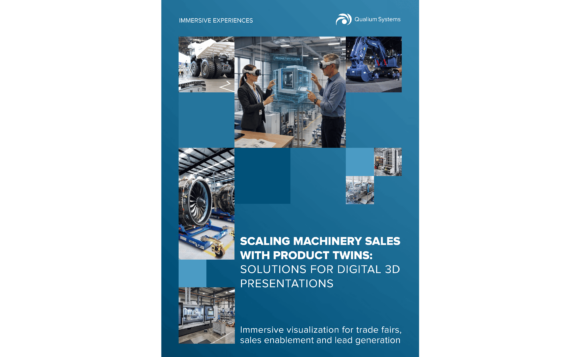
Our new whitepaper compares traditional sales methods (trade shows, physical demos, and international product presentations) with a VR-based approach and puts concrete numbers on the difference:
- Trade show presence: ~€340K → €30–50K per event.
- A year of international demos: ~€200K → €40K.
Three scenarios, one model
The whitepaper also breaks down three places an immersive 3D model does the work, each with its own logic:
- Sales presentations: Guide a prospect through a full-scale, interactive machine.
- Trade fairs: Show the whole catalog from a 50 m² booth instead of shipping one or two machines to a 200 m² stand.
- Inbound lead generation: Let buyers explore the machine in the browser before they fill out a form.
It also includes real deployments from construction, mining, elevator, and heat transfer manufacturers, plus the buyer-behavior data behind the shift to digital-first sales.
If you sell equipment that is expensive to ship, hard to demo, or still on the roadmap, this is the case for turning your CAD data into a sales asset.
Latest Articles