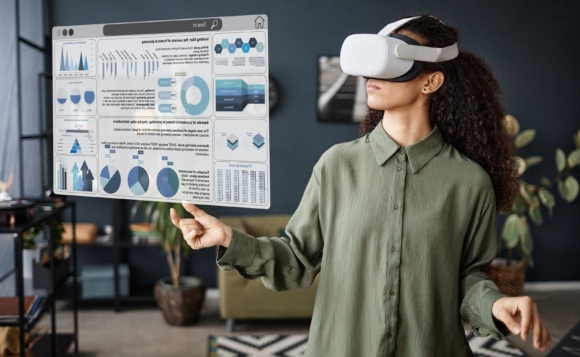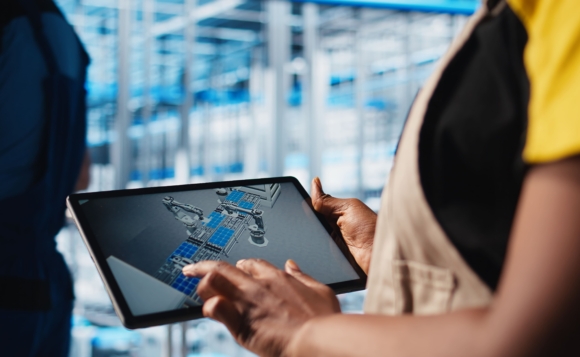
Industrial digital transformation is no longer just about automation or collecting data. More and more, it comes down to having a live, accurate digital representation of what is actually happening across physical operations. That is what a digital twin does: it creates a virtual model of a machine, a production line, or an entire facility, and keeps it synchronized with real-world data in real time. This makes it more than a visualization tool. It becomes a working instrument for a variety of industrial applications: simulations, predictive maintenance, monitoring and analytics, process and operational optimization, quality control, worker enablement, EHS solutions, and faster decision-making.
Industrial Extended Reality (XR) and immersive technologies are entering their second wave of adoption. While the first wave was shaped mainly by experimentation with XR, the current stage is enabled by mature hardware and significantly stronger digital capabilities, allowing organizations to realize the true value of VR and AR in practical, scalable ways. In parallel, digital transformation is shifting from the automation-led, low-human-involvement logic of Industry 4.0 toward a human-centric model built on human-machine collaboration and co-piloting in Industry 5.0.
Industry is adopting Extended Reality (XR) faster than any other sector. Manufacturing and industrial operations accounted for 35.1% of the global digital twin market in 2025. More than half of companies using digital twins report profitability increases of over 20%, and Gartner predicts that by 2027, 40% of large industrial companies will use the technology, resulting in increased revenue. The market overall is projected to grow from $49.2 billion in 2026 to $228.46 billion by 2031.
These numbers show that digital twins become a core part of how industrial companies compete and operate. In this article, we look at the specific areas where digital twins create the most value in the industrial sector today, walk through real-world cases from companies already using them at scale, and discuss where the technology is headed next.
Why Digital Twins are more than virtual models
The role of digital twins has broadened significantly, now covering simulation, planning, operations, and essential 3D visualization needs. As a strategic capability, the digital twin helps organizations understand the present state of assets and systems, anticipate what comes next, and make more precise, informed decisions.
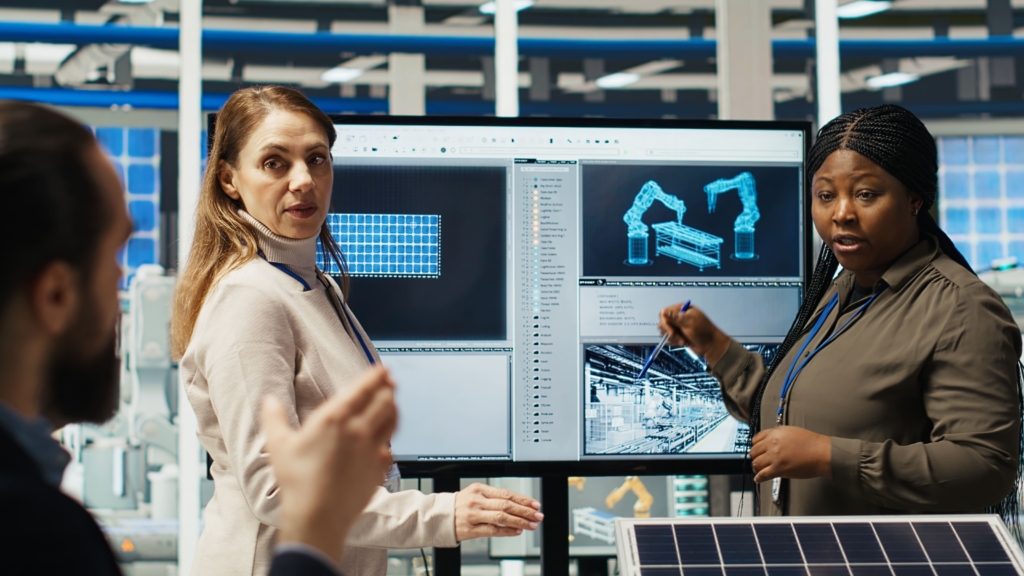
This is what separates them from the technologies they are often confused with. A 3D model is static and disconnected from physical reality. A simulation runs defined scenarios but doesn’t update as circumstances change. BIM captures asset properties at a point in time—valuable, but not dynamic. A digital twin does all three, continuously. Let’s look at how this works from a technological perspective.
The technology stack behind the intelligence
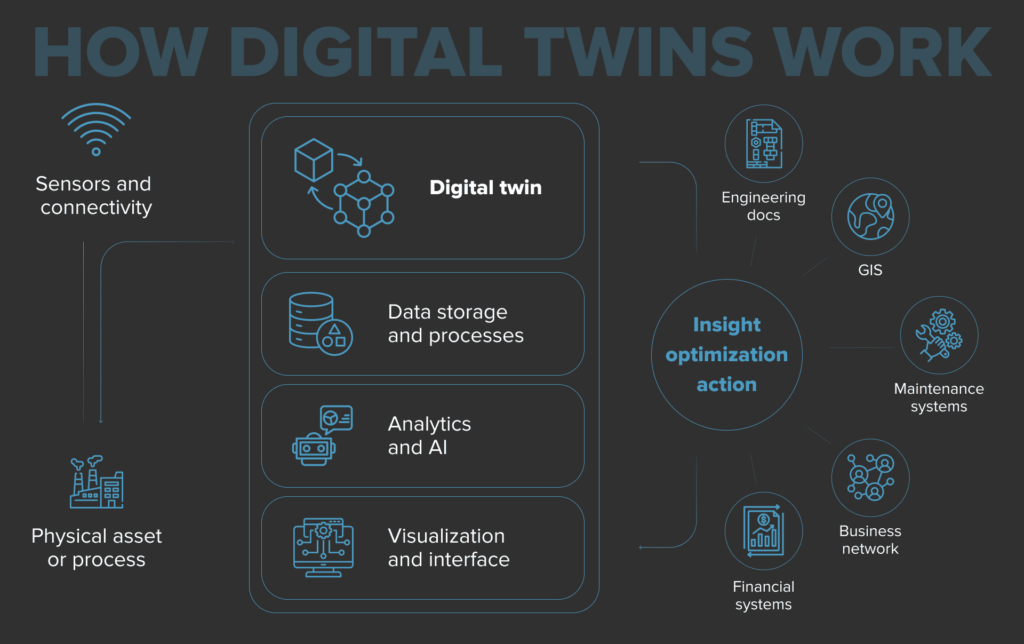
Within the virtual model, three interconnected layers work together.
- The first is the data storage and processing layer, responsible for ingesting, organizing, and structuring incoming data streams. IoT sensors and edge devices form the foundation of data acquisition, continuously capturing physical parameters: temperature, vibration, pressure, energy consumption, throughput. This data moves through real-time pipelines into processing environments.
- The second is the analytics and AI layer, which interprets this data by detecting anomalies, identifying patterns, generating forecasts, and providing recommendations to guide operational decisions.
- The third is the visualization and interface layer, translating these insights into clear, actionable formats: dashboards, alerts, or interactive simulations, that engineers, operators, and executives can easily use.
A digital twin also integrates with the broader enterprise ecosystem, including engineering documentation, GIS platforms, maintenance systems, financial tools, and business networks.
The result is a closed loop of intelligence. Physical reality continuously updates the virtual mode → the model generates insights → and those insights guide decisions that impact the physical system.
Types of digital twins
Depending on the level of detail and the specific operational goals, a digital twin can focus on a single component, a complete asset, an entire system, or even a full process. Recognizing these distinctions helps organizations select the right model for each use case.
A component twin represents a single element (a pump, a bearing, a sensor) and is primarily used for granular condition monitoring and early failure detection.
An asset twin integrates multiple components into a unified model of a complete physical asset, such as a machine or a turbine, enabling a more comprehensive view of performance and interdependencies.
A system twin extends this further, representing how multiple assets interact within a broader operational environment (a production line, a power grid, or a supply chain node).
A process twin models entire workflows and decision sequences, making it possible to trace how disruptions, inefficiencies, or interventions propagate across an organization.
In real-world deployments, these levels are layered: component twins feed into asset twins, which feed into system and process twins. This nested setup mirrors actual operational complexity and enables insights at any level, from individual parts to entire workflows.
Where digital twins create the most industrial value
Below, we break down the use cases where digital twins are generating the most value in the industrial sector today.
Predictive maintenance and asset reliability
Unplanned equipment downtime remains one of the most costly scenarios for any industrial enterprise. When a critical asset fails unexpectedly, the company loses not only on repairs but also on production chain disruptions, logistical failures, and reputational risks. This is why predictive maintenance powered by digital twins has become one of the most mature and economically justified applications of the technology.
The traditional approach to maintenance operates on two models: reactive (repair after failure) or scheduled preventive (servicing on a fixed schedule, regardless of the actual condition of the equipment). Both models are inefficient. The first leads to emergency shutdowns, while the second results in excessive spending on servicing components that still have significant remaining life.
The digital twin changes this paradigm. It creates a virtual copy of a physical asset that continuously receives sensor data and updates in real time. Through machine learning algorithms, the system analyzes wear patterns, compares current conditions against historical data, and predicts the moment when a component will reach a critical state. This enables maintenance to be scheduled precisely when it is actually needed, rather than according to a calendar-based plan.
The result is a threefold effect: reduced unplanned downtime, lower spare parts costs, and extended asset lifecycle.
Case: Rolls-Royce’s digital twins of aircraft engines
British company Rolls-Royce, the world’s second-largest manufacturer of aircraft engines, is one of the most shining examples of industrial digital twin deployment. The company creates virtual copies of its aero engines.
The process works as follows: engineers create a digital twin of the engine as a precise virtual copy of the real-world product, then install on-board sensors and satellite connectivity on the physical engine to collect data, which is continuously relayed back to its digital twin in real time. The virtual model analyzes how the engine is performing and predicts when it will require maintenance. To deal with a huge amount of data, Rolls-Royce has created a new platform that brings in data from its airline customers, which is then fed into a Microsoft Azure data lake. This is then turned into a Databricks Lakehouse and analysed using Databricks ML and AI tools.
The key innovation by Rolls-Royce lies in its personalized approach to each engine. Rather than servicing all engines according to a standard manual schedule, the company has shifted to a model where maintenance regimes are tailored to the actual life each engine has lived. Everything is taken into account: how the pilot flies the aircraft, the climatic conditions of the routes, and the load the engine experiences.
The practical results are remarkable. Digital twins have enabled the company to extend the time between maintenance for some engines by up to 50%, which has also allowed it to dramatically reduce its inventory of parts and spares. For airlines, this means fewer interruptions, as the engine stays on wing longer. Where a particular part might previously have been rated for, say, a thousand flights under a pessimistic scenario, accurate data from the digital twin can extend that life to two or even five thousand flights.
Beyond maintenance, Rolls-Royce’s digital twins save time and money in the rigorous testing of new engines that need to gain certification.
Operations optimization and system-wide visibility
Industrial operations rarely fail because of a single broken component. More often, the real losses come from invisible inefficiencies: bottlenecks that nobody notices until throughput drops, coordination gaps between departments, or decisions made on incomplete data because information is scattered across disconnected systems.
Digital twins address this challenge by creating a unified, real-time virtual representation of an entire operational ecosystem. First, operators no longer need to jump between five different screens to understand what is happening across the facility. Second, it enables scenario simulation: before implementing a change in production flow, staffing, or logistics routing, teams can test it virtually and observe the consequences without risking real disruption. Third, it helps identify bottlenecks and coordination inefficiencies that would otherwise remain hidden in the noise of day-to-day operations.
Case: Port of Corpus Christi’s OPTICS
The Port of Corpus Christi in Texas is the largest crude export terminal in the U.S. and third largest in the world, spanning roughly 36 miles.
The port faced a fundamental challenge: dispatchers had to manually collect and interpret data from dozens of siloed applications. Information had to be relayed from office staff to people in the field through screenshots, emails, radios, and cell phones. Plus, there was no cohesive integration between disparate systems.
To solve this, the port developed a digital twin called OPTICS (Overall Port Tactical Information Computer System) using the Unity game engine integrated with Esri’s ArcGIS platform.
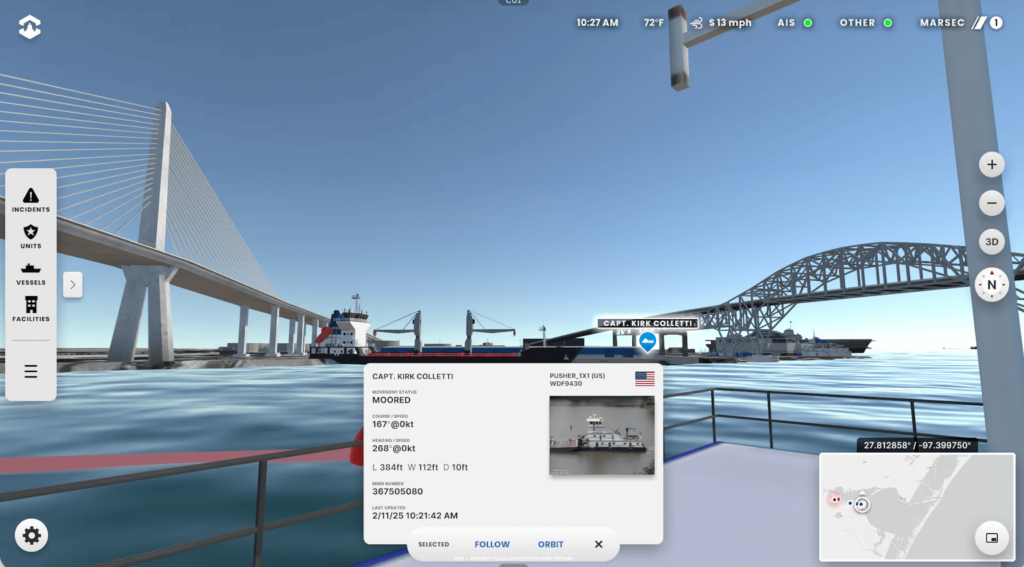
The system combines satellite data, IoT sensors, and 3D modeling with advanced analytics and AI, providing real-time tracking of hundreds of vessels, weather and tide monitoring, and security-level data from the Coast Guard’s Maritime Security system. All of this is rendered in an interactive environment where operators can navigate the port visually, click on any vessel to see its status, speed, and movement, and assess its proximity to other ships and infrastructure.
Staff can use the system to monitor the port in several modes: real time, near real time with approximately a two-minute delay, and future state. This last capability is critical for planning. The port can virtually simulate future scenarios, such as assessing sightlines and potential risks from a new bridge under construction over the ship channel, identifying vulnerabilities before the structure is even completed.
Process quality and production resilience
In high-precision manufacturing, quality is a continuous condition that must be maintained across thousands of variables simultaneously: temperatures, pressures, feed rates, material properties, environmental conditions, and human inputs. Even a small deviation in any of these can lead to defective parts, wasted materials, production delays, or serious safety risks down the line.
Traditional quality control relies heavily on post-production inspection: parts are manufactured, then checked. By the time a defect is discovered, the damage is already done. The production time is lost, materials are wasted, and the root cause may be difficult to trace back through a complex process chain.
Digital twins shift this model to prevention. They enable continuous monitoring of every relevant parameter as production unfolds. ML algorithms analyze incoming data streams, compare them against expected behavior, and flag anomalies the moment they emerge, often before a human operator would notice anything unusual.
Beyond anomaly detection, digital twins contribute to production resilience. When a disruption occurs, whether a machine malfunction, a supply chain delay, or an unexpected change in material properties, the virtual model can simulate alternative scenarios and help teams adapt without halting the entire line. The result is a production system that is not only more precise, but also more adaptive and less fragile.
Case: Airbus’s digital twins across aircraft manufacturing
Airbus, one of the world’s largest aircraft manufacturers, is pursuing what it calls “end-to-end digitalization,” making all information about its aircraft, their production, and maintenance systems readily accessible in digital form. The approach is being deployed across all Airbus divisions, from commercial aircraft to helicopters to defense and space, and was developed in partnership with Dassault Systemes using its 3DExperience platform.
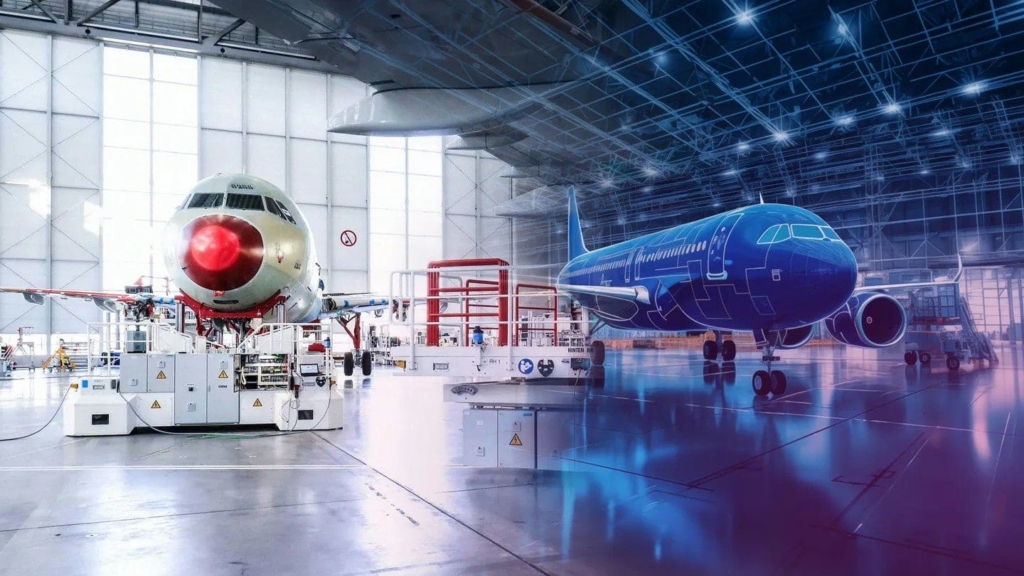
At Airbus factories, industrial digital twins use machine data to monitor production processes in real time. At Hangar 9 in Hamburg and in the Gearbox manufacturing line for Helicopters in Marignane, production progress is automatically tracked and compared with theoretical plans. This continuous comparison between what should be happening and what is actually happening creates an immediate feedback loop for spotting deviations.
At the Saint-Eloi plant in Toulouse, data from drilling and milling machines helps the company detect quality deviations. In Illescas, Spain, monitoring parameters like speed, pressure, temperature, and humidity allows teams to identify quality issues at a composite draping station, where even minor environmental fluctuations can affect the structural integrity of the materials used in aircraft components.
Airbus reports that data analytics applied through these digital twins has reduced rework by up to 20% in certain processes, a substantial figure in an industry where rework is both expensive and time-consuming.
Virtual сommissioning
Every new production line, every robot cell, every layout change carries a hidden cost: the gap between the plan and reality. Traditionally, this gap is closed through physical commissioning, a process where equipment is installed, tested, adjusted, and retested on the actual factory floor. It works, but it is slow, expensive, and disruptive. Production must be paused, engineers must be on site, and mistakes discovered during physical testing require real-world corrections that consume time and resources.
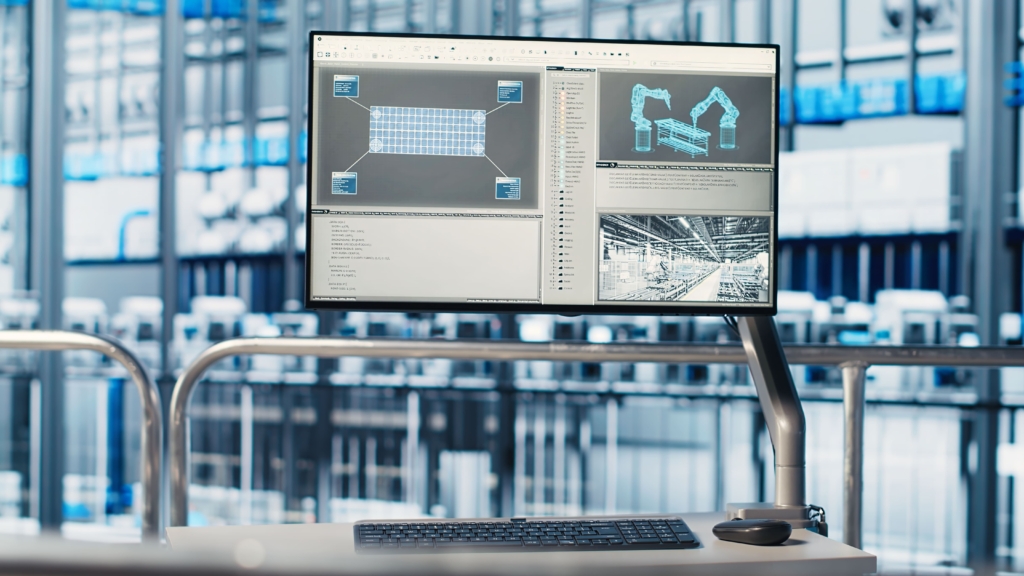
Virtual commissioning eliminates much of this risk by shifting the testing phase into the digital world. Before any physical construction begins, companies create digital twins of their production lines, robotic cells, and logistics systems, then simulate their operation in a virtual environment. Control software is tested against the virtual model, robotic movements are verified for collisions and cycle times, and material flows are optimized, all without touching a single piece of physical equipment.
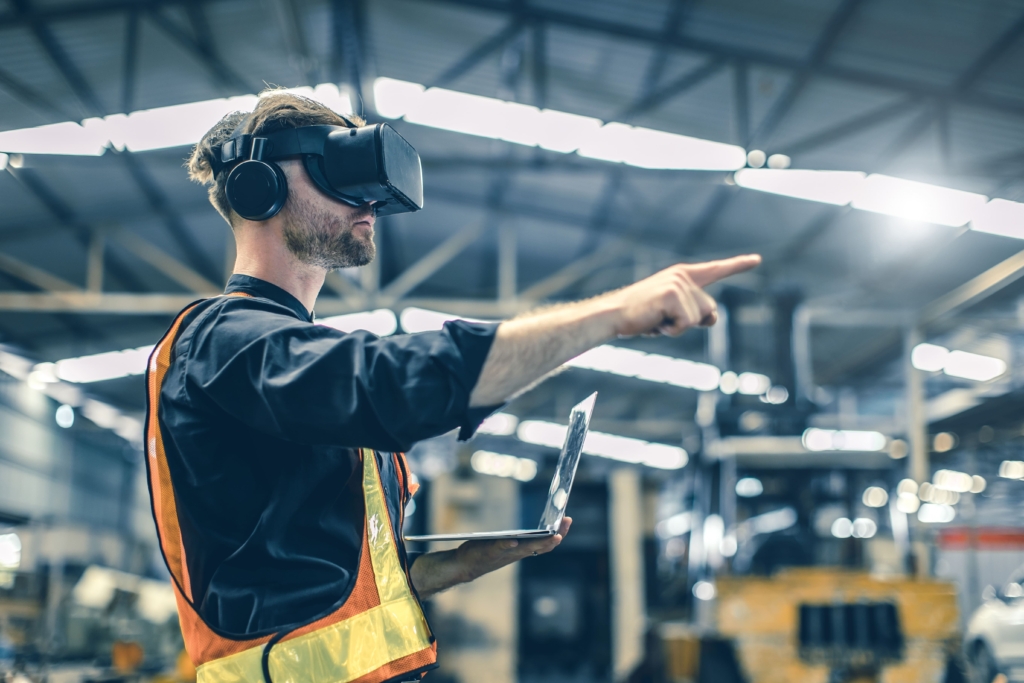
Virtual commissioning compresses timelines, allowing multiple design iterations to happen in days rather than months. It enables global collaboration, since engineers in different locations can work on the same virtual model simultaneously. And it fundamentally changes the risk profile of new product introductions: by the time equipment is physically installed, it has already been validated in a digital environment that mirrors real-world conditions with high fidelity.
Case: BMW Group’s Virtual Factory
BMW Group, one of the world’s largest automakers, produces 2.5 million vehicles per year, 99 percent of which are assembled to individual customer specifications. Coordinating changes across such a production network using traditional methods had become virtually impossible.
The answer was the Virtual Factory, a digital twin-based system that allows production processes to be simulated and optimized virtually before physical implementation, across more than 30 production sites worldwide.
Building this system began with massive data collection. Starting in November 2020, BMW scanned more than seven million square meters of indoor space and 15 million square meters of outdoor production areas using NavVis mobile mapping technology with millimeter precision. This data became the foundation for building virtual copies of all plants.
Built on NVIDIA Omniverse, the platform enables real-time 3D simulations that allow planners to model factory layouts, simulate manual tasks, and optimize robotics and logistics systems. The platform integrates tools from multiple vendors, including Siemens Process Simulate, Autodesk Revit for building planning, and Dassault Systemes CATIA for vehicle design, bridging previously siloed environments into a unified workspace.
The most compelling proof of the approach came with the Debrecen plant in Hungary. BMW built this facility entirely in virtual space before breaking physical ground. In March 2023, the plant achieved virtual start of production more than two years before actual operations began, becoming the world’s first factory planned and validated completely through simulation.
The system is now tackling an even larger challenge. Between now and 2027, the BMW Group will integrate more than 40 new or updated vehicle models into its global production. This will first be done virtually to ensure immediate stability at the plants.
The system is projected to reduce production planning costs by up to 30%.
Where industrоial digital twins are headed
The technology is maturing fast, and its trajectory points in several clear directions. Below, we look at four trends that are shaping the next stage of industrial digital twins.
- Trend 1: From individual assets to enterprise-wide ecosystems
Early digital twins were built around individual assets: one engine, one machine, one robotic cell. The current wave is expanding in both directions, horizontally across facilities and vertically through organizational layers. Asset-level twins are being connected into plant-level models, plant models are being linked into network-wide simulations, and entire value chains are gradually becoming digitally representable. The cases of BMW and Airbus clearly demonstrate this.
- Trend 2: Immersive environments
Another trend reshaping how people interact with digital twins is the emergence of the industrial metaverse: immersive 3D environments where operational twins become something you can walk through, not just look at on a dashboard.
The global industrial metaverse market is expected to reach $181 billion by 2030, driven largely by the convergence of digital twins, extended reality, and AI.
Building these immersive layers requires deep expertise in spatial computing, real-time 3D rendering, and cross-platform XR development. For industrial businesses looking to adopt XR, Qualium Systems serves as a trusted technology partner, delivering VR and Web3D solutions that simplify the presentation of complex equipment, enhance product understanding, and support more effective digital engagement.
- Trend 3: The standards challenge
Scaling digital twins beyond a single company creates a challenge that technology alone cannot fix: getting different systems to work together. A digital twin relies on data flowing between sensors, software, machines, and people. When a manufacturer, its suppliers, and its logistics partners each run their own digital twins, those systems need a common language to exchange information, and today, that language is still being developed.
Several organizations are working to close this gap, including the International Organization for Standardization (ISO), the Industrial Digital Twin Association (IDTA), the Institute of Electrical and Electronics Engineers (IEEE), and the Digital Twin Consortium (DTC).
Open standards like ISO 23247 for digital twin frameworks and the Asset Administration Shell (AAS) concept for semantic interoperability in Industry 4.0 already exist.
Currently, various programs designed to advance digital twin systems and enabling technologies, so-called Digital Twin Testbeds, are being created. In December 2025, the Digital Twin Consortium announced four new testbeds for validating proof of value, demonstrating interoperability, and accelerating adoption across manufacturing, energy, healthcare, and smart cities.
- Trend 4: From modeling to acting
Today, most industrial twins operate in an advisory role. They detect anomalies, forecast failures, and surface recommendations, but a human reviews the output and makes the call. The next generation removes that delay for routine decisions.
AI-driven digital twins are evolving from passive representations into prescriptive, self-optimizing systems. Machine learning algorithms find the best process settings in real time, improve the accuracy of virtual sensors, and allow multiple digital twins to communicate with each other and with physical equipment to make decisions without waiting for human input. As a result, people can spend their time on judgment and creativity rather than routine monitoring.
Latest Articles