Augmented Reality in Education: Implementing and Prognosis
Augmented Reality in Education Implementing and Prognosis

Augmented Reality has advanced progressively to become a technology which many tech companies have acknowledged, implemented and adopted into one of their main futuristic goals. Augmented reality (AR) is defined as the superimposition of a digitally generated entity or components into the real world view by means of certain technologies. AR has recently been implemented in various avenues, especially in the gaming world with much success. The breakthroughs which have been realized over the past few years are what have fueled the adoption of AR into various fields.

Education is one of the sectors which can benefit from AR, seeing as many individuals today own smartphones and other gadgets. While these devices are not primarily used for educational purposes, the implementation of AR into education models may alter the norm and bring about new ways of using hand-held devices such as smartphones as learning mediums. The untapped potential of AR applicability provides developers with the opportunity to channel creativity into various academic sectors as outlined below.

AR in Classrooms

One probable application of AR technology for application is implementation within classrooms and other learning environments such as laboratories. AR can be implemented in a way which enables the support of plain learning materials with digitally augmented features. The visual modeling of various academic concepts while adding animated features can help students to grasp concepts better and enhance their attention spans. Additional information and fun facts can also be more effectively disseminated through use of elements such as pop-up screens.

AR implementation in classrooms can also help both students and teachers to acquire information faster than through traditional means. By scanning a book, for example, students and teachers can decide whether or not they are relevant or informative enough to be included in their learning curricula. Additionally, they can use AR to identify certain words and phrases within learning material, enabling them to reduce the time taken on research.

Difficult Concepts Simplified

Academic routines have been traditionally designed to include more text than graphical content overall. However, the retention of knowledge has been proven time and again to be more efficient when there is a graphical representation of the material. AR presents learning institutions with a new paradigm for teaching, where concepts which were limited to paper print are brought to life through augmented artistry. The 3D capabilities of AR move even further to provide more immersive learning environments to students and without the need for complicated tools and gadgets thanks to software advancements.

The added advantage about AR is that learning through text does not have to be abandoned. It provides an ideal situation where the best of both entities are brought together to facilitate efficient learning experiences, where a text is used to pinpoint technical terms and AR is used to visualize them and bring them to life.

Enhancement of Interaction and Involvement

Most learners struggle with making learning an involving and interactive activity. However, institutions can break barriers by adopting AR technology into studies. The addition of augmented concepts into learning sessions can help learners to develop genuine interests in their studies, thereby motivating them to take part in classroom sessions. The capture of student attention through AR can also result in longer attention spans, enabling learners to teach more adequately and get more done during class hours.

AR/VR Apps

Enhanced Discovery

The implementation of AR in schools, in conjunction with places such as museums and zoos, can enable students to discover and learn about various facts without the need for long-distance travels. AR allows the projection of content onto classrooms and mobile devices, alongside added functionality such as fact-finding and information tabs. Such tools provide a more immersive experience for every student because it minimizes congestion within these venues and allows every student to fully view the artifacts, animals etc. to their desired levels.

AR can also be incorporated along these visits to give more information about the said artifacts on site. This way, the student combines both the physical depiction of what they are viewing alongside the digital graphic representation of facts and traits which the object being viewed possesses.

Object Modeling

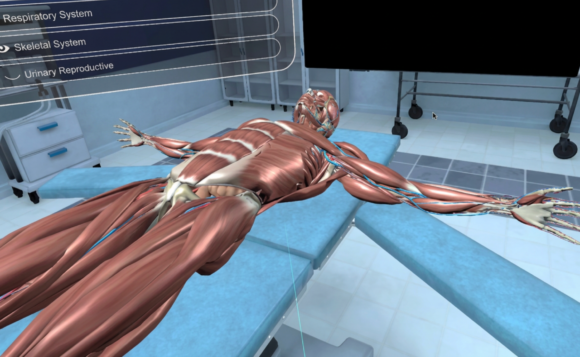
Various AR applications are popping up throughout the world, and some of them are centered on education. The use of AR apps in education can extend from more than just viewing and learning to that of active participatory roles by the students. Teachers can incorporate exercises, quizzes and other prompt features which encourage the learner to interact with AR and use it to solve various academic challenges. In medicine, for instance, students can learn about and interact with the human anatomy on a virtual level. The augmented model can allow students to touch various body parts and view the reactions, which will also have been programmed into the model.

Less Expensive Learning Material

The graphical models of education that are currently in place involve the use of physical modeling of items, the creation of prototypes and extensive charts to illustrate ideas and concepts. Such material, however, is very expensive in the long run. Most of the time schools do not have the financial capabilities to provide the building materials for their projects. With AR, physical representation is minimized as students have a platform for digital modeling and representation of ideas. Digital presentations not only allow a cost-effective means of presenting ideas, it also eliminates the limitations which physical materials may have, allowing students to stretch their creativity to the maximum capacity.

Latest Articles
How Extended Reality Is Reshaping Modern Marketing
March 31, 2026
How Extended Reality Is Reshaping Modern Marketing

The global extended reality market (including VR, AR and MR) is expected to reach $84.86 billion by 2029, growing at an estimated annual rate of 28%. But the bigger point isn’t just that the market is expanding, it’s that XR is already proving its value in the places marketers care about most: engagement, conversion, and customer confidence. In ecommerce, interacting with products via AR leads to a 94% higher conversion rate compared to products without AR. That makes sense: when people can better understand what they’re buying, they’re more likely to move forward and less likely to regret the purchase later.  XR also gives brands something that’s getting harder to win online: attention. VR campaigns generate about 46% higher engagement than traditional digital campaigns. People who interact with AR content spend around 2.7 times longer on product pages.  XR is now showing up in real results. That is why marketing is moving beyond static content toward immersive experiences. In the following sections, we will share how these technologies can be applied to marketing strategies and explore what the future of immersive experiences might look like. How XR is transforming modern marketing: 4 use cases that prove it works With XR, businesses can turn traditional campaigns into fully immersive experiences, where customers can explore products, interact with brands, and connect with content in memorable ways. Its value goes far beyond visual appeal, directly impacting the business growth and customer journey itself. And while this may not be immediately obvious, XR can also save significant resources, reducing the need for physical prototypes, showrooms, or large-scale events, making marketing more efficient. This is why more businesses are integrating immersive technologies into their marketing strategies, even despite certain challenges, such as development and VR hardware costs, as well as complex technology integration. Below, we highlight several successful use cases of immersive technologies in marketing. Virtual try-ons One of the most persistent barriers to online purchasing is uncertainty. Will these glasses suit my face shape? Will this sofa fit in my living room? Will this shade of lipstick actually complement my skin tone? These are questions that traditionally required a physical store visit. Virtual try-on eliminates that leap entirely. The technology behind this falls into a few distinct forms. The most accessible is smartphone-based AR. Customers point their phone at themselves or their surroundings, and the app overlays a true-to-scale digital product in real time. A striking example is the FindYourGlasses app developed by Qualium Systems. A step further are dedicated AR headsets and glasses, which immerse the customer in a mixed-reality environment where products can be explored in even greater depth and spatial accuracy.  These technologies help customers understand what they are buying before making a purchase, enabling them to make decisions based on accurate, personalized visualization rather than guesswork. Real-world example: IKEA Place AR App IKEA Place AR app lets shoppers visualize furniture in their own physical spaces before buying. Customers simply point their phone camera at a room, select a piece of furniture, and see it rendered in realistic scale within their actual environment. This removes the biggest friction point in furniture shopping: not knowing whether a sofa or shelf will actually fit or match the existing interior design. Results: After launch, the app was downloaded millions of times and became one of the most widely adopted retail AR experiences globally. IKEA reported increased customer engagement and reduced returns because customers could see how items fit before purchase. The company reported also that customers who use the IKEA Place app are 11% more likely to complete a purchase compared to those who do not use the app. Virtual showrooms & Tours Some purchases simply feel too significant to make without experiencing the space or context first. Traditionally, that meant showing up in person. Virtual showrooms and immersive tours remove that requirement. The technology here ranges from 360° web-based tours (viewable in any browser without additional hardware) to fully immersive VR experiences delivered through headsets. Visitors can walk through a branded space, interact with products, and access information on demand, without leaving their couch or office. Automotive brands use virtual showrooms to let buyers explore vehicle interiors, switch trims and colors, and get a feel for the cabin before visiting a dealership. Real estate platforms offer immersive property walkthroughs that let buyers shortlist homes remotely. Hotels and resorts use virtual tours to sell the experience upfront.  The value is especially pronounced in the machinery and heavy equipment sector, where physically demonstrating a product has always been costly: shipping industrial equipment to trade shows, organizing on-site demos, and flying prospects to manufacturing facilities all consume significant budgets. VR removes that overhead entirely: a potential buyer can step inside a virtual factory floor, operate a machine in a simulated environment, and evaluate complex equipment in full detail. Real-world example: Virtual showroom for MAKEEN Energy industrial equipment MAKEEN Energy, a global corporation delivering industrial gas solutions and heavy infrastructure equipment, built a true-to-scale virtual showroom. Using 3D models of their equipment in a virtual environment, they were able to pack their sprawling machinery into a portable VR headset and bring it to any trade fair.  Results: By no longer shipping heavy equipment around the world and reducing travel with virtual product demonstrations, MAKEEN Energy was able to cut logistics costs significantly. The virtual showroom also accelerated complex, multi-stakeholder sales by giving engineers, technicians, and purchase managers across different countries a shared, detailed view of the product. What began as a trade fair tool evolved into a company-wide asset for sales, training, and communications. For industrial businesses looking to adopt XR, Qualium Systems serves as a trusted technology partner, delivering VR and Web3D solutions that simplify the presentation of complex equipment, enhance product understanding, and support more effective digital engagement. Immersive brand storytelling XR gives brands the ability to place customers at the center of a narrative, transforming passive content consumption into a first-person experience that is far harder to forget. A VR film or AR…

June 27, 2025
Methodology of VR/MR/AR and AI Project Estimation

Estimation of IT projects based on VR, XR, MR, or AI requires both a deep technical understanding of advanced technologies and the ability to predict future market tendencies, potential risks, and opportunities. In this document, we aim to thoroughly examine estimation methodologies that allow for the most accurate prediction of project results in such innovative fields as VR/MR/AR and AI by describing unique approaches and strategies developed by Qualium Systems. We strive to cover existing estimation techniques used at our company and delve into the strategies and approaches that ensure high efficiency and accuracy of the estimation process. While focusing on different estimation types, we analyze the choice of methods and alternative approaches available. Due attention is paid to risk assessment being the key element of a successful IT project implementation, especially in such innovative fields as VR/MR/AR and AI. Moreover, the last chapter covers the demo of a project of ours, the Chemistry education app. We will show how the given approaches practically affect the final project estimation. Read

June 27, 2025
What Are Spatial Anchors and Why They Matter

Breaking Down Spatial Anchors in AR/MR Augmented Reality (AR) and Mixed Reality (MR) depend on accurate understanding of the physical environment to create realistic experiences, and they hit this target with the concept of spatial anchors. These anchors act like markers, either geometric or based on features, that help virtual objects stay in the same spot in the real world — even when users move around. Sounds simple, but the way spatial anchors are implemented varies a lot depending on the platform; for example, Apple’s ARKit, Google’s ARCore, and Microsoft’s Azure Spatial Anchors (ASA) all approach them differently. If you want to know how these anchors are used in practical scenarios or what challenges developers often face when working with them, this article dives into these insights too. What Are Spatial Anchors and Why They Matter A spatial anchor is like a marker in the real world, tied to a specific point or group of features. Once you create one, it allows for some important capabilities: Persistence. Virtual objects stay exactly where you placed them in the real-world, even if you close and restart the app. Multi-user synchronization. Multiple devices can share the same anchor, so everyone sees virtual objects aligned to the same physical space. Cross-session continuity. You can leave a space and come back later, and all the virtual elements will still be in the right place. In AR/MR, your device builds a point cloud or feature map by using the camera and built-in sensors like the IMU (inertial measurement unit). Spatial anchors are then tied to those features, and without them, virtual objects can drift or float around as you move, shattering the sense of immersion. Technical Mechanics of Spatial Anchors At a high level, creating and using spatial anchors involves a series of steps: Feature Detection & Mapping To start, the device needs to understand its surroundings: it scans the environment to identify stable visual features (e.g., corners, edges). Over time, these features are triangulated, forming a sparse map or mesh of the space. This feature map is what the system relies on to anchor virtual objects. Anchor Creation Next, anchors are placed at specific 3D locations in the environment in two possible ways: Hit-testing. The system casts a virtual ray from a camera to a user-tapped point, then drops an anchor on the detected surface. Manual placement. Sometimes, developers need precise control, so they manually specify the exact location of an anchor using known coordinates, like ensuring it perfectly fits on the floor or another predefined plane. Persistence & Serialization Anchors aren’t temporary — they can persist, and here’s how systems make that possible: Locally stored anchors. Frameworks save the anchor’s data, like feature descriptors and transforms, in a package called a “world map” or “anchor payload”. Cloud-based anchors. Cloud services like Azure Spatial Anchors (ASA) upload this anchor data to a remote server to let the same anchor be accessed across multiple devices. Synchronization & Restoration When you’re reopening the app or accessing the anchor on a different device, the system uses the saved data to restore the anchor’s location. It compares stored feature descriptors to what the camera sees in real time, and if there’s a good enough match, the system confidently snaps the anchor into position, and your virtual content shows up right where it’s supposed to. However, using spatial anchors isn’t perfect, like using any other technology, and there are some tricky issues to figure out: Low latency. Matching saved data to real-time visuals has to be quick; otherwise, the user experience feels clunky. Robustness in feature-scarce environments. Blank walls or textureless areas don’t give the system much to work with and make tracking tougher. Scale drift. Little errors in the system’s tracking add up over time to big discrepancies. When everything falls into place and the challenges are handled well, spatial anchors make augmented and virtual reality experiences feel seamless and truly real. ARKit’s Spatial Anchors (Apple) Apple’s ARKit, rolled out with iOS 11, brought powerful features to developers working on AR apps, and one of them is spatial anchoring, which allows virtual objects to stay fixed in the real world as if they belong there. To do this, ARKit provides two main APIs that developers rely on to achieve anchor-based persistence. ARAnchor & ARPlaneAnchor The simplest kind of anchor in ARKit is the ARAnchor, which represents a single 3D point in the real-world environment and acts as a kind of “pin” in space that ARKit can track. Building on this, ARPlaneAnchor identifies flat surfaces like tables, floors, and walls, allowing developers to tie virtual objects to these surfaces. ARWorldMap ARWorldMap makes ARKit robust for persistence and acts as a snapshot of the environment being tracked by ARKit. It captures the current session, including all detected anchors and their surrounding feature points, into a compact file. There are a few constraints developers need to keep in mind: World maps are iOS-only, which means they cannot be shared directly with Android. There must be enough overlapping features between the saved environment and the current physical space, and textured structures are especially valuable for this, as they help ARKit identify key points for alignment. Large world maps, especially those with many anchors or detailed environments, can be slow to serialize and deserialize, causing higher application latency when loading or saving. ARKit anchors are ideal for single-user persistence, but sharing AR experiences across multiple devices poses additional issues, and developers often employ custom server logic (uploading ARWorldMap data to a backend), enabling users to download and use the same map. However, this approach comes with caveats: it requires extra development work and doesn’t offer native support for sharing across platforms like iOS and Android. ARCore’s Spatial Anchors (Google) Google’s ARCore is a solid toolkit for building AR apps, and one of its best features is how it handles spatial anchors: Anchors & Hit-Testing ARCore offers two ways to create anchors. You can use Session.createAnchor(Pose) if you already know the anchor’s position, or…


Let's discuss your ideas

Contact us