Beyond the Screen: Integrating WEART Haptic Devices for a Multi-Sensory Enterprise Experience
post

Navigating the intricate maze of technological progress and human engagement reveals a constantly shifting terrain. Haptic devices stand out as the vanguard in this revolution, and WEART is undoubtedly leading the charge. In this expanded discourse, we at Qualium Systems, specialists in custom IT engineering, explore the engineering marvels and the expansive business applications of WEART’s pioneering haptic technology.

The Technical Ecosystem: A Deeper Dive

Hardware Innovation: More than Just Touch

WEART’s devices go beyond mere simulation to recreate tactile sensations intricately. The wearables make use of cutting-edge actuators and sensors to offer a wide spectrum of tactile experiences, from the velvety softness of a petal to the ruggedness of a rock.

1. Actuators: Employing both mechanical and electronic components, actuators deliver precise tactile feedback. They play a crucial role in mimicking various textures, thermal cues and forces, pushing the boundaries of what users can ‘feel’ digitally.
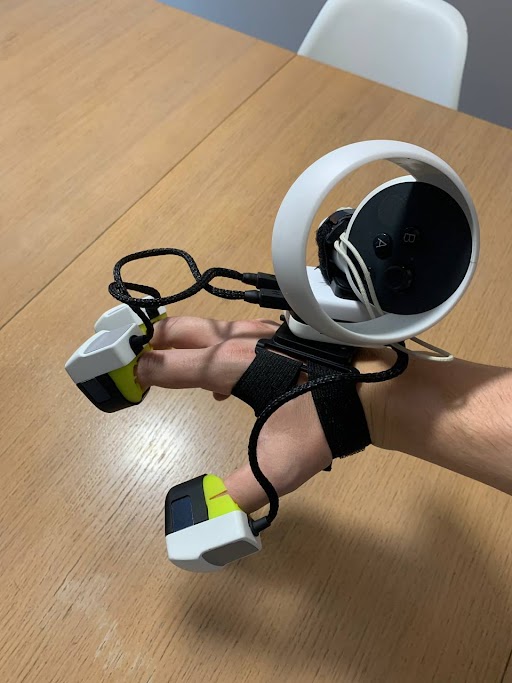
Hardware

2. Sensors: These aren’t your everyday touch sensors. WEART’s sensors can detect minute changes in pressure and movement, making the haptic interface responsive and incredibly realistic.
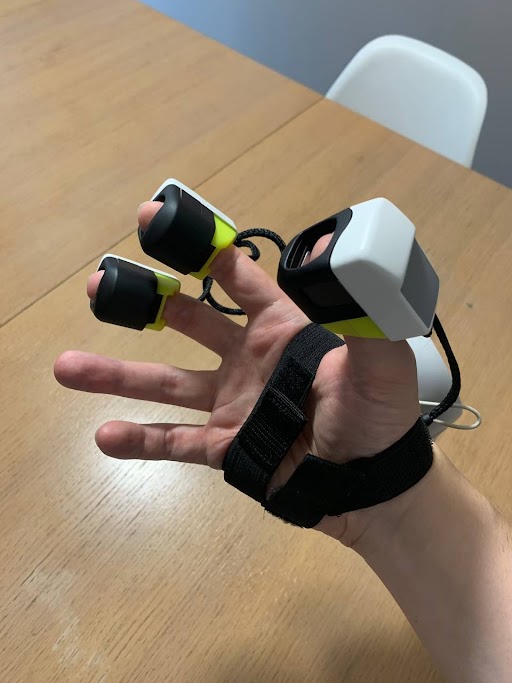
Hardware

Software Engineering: Facilitating Haptic Integration

Qualium Systems takes pride in offering SDKs compatible with both Unity and Unreal Engine, making the integration of WEART’s groundbreaking haptic features easier than ever.

1. Unity & Unreal Engine SDKs: These engines are favored by developers for their ease of use and flexibility. Our SDKs are tailored for these platforms, offering rapid prototyping and high-fidelity rendering capabilities.

2. Custom APIs: Our SDKs come with a range of APIs that allow you to fine-tune the haptic experience to align with specific use-cases or requirements.

3. Data Analytics: The SDKs also include telemetry functions that capture key metrics. Businesses can assess user engagement in real-time, modifying experiences for better interaction.

Expanded Case Study: The Transformational Power of Haptic Technology in VR Chemistry Lessons

A Paradigm Shift in Science Education

Our VR Chemistry Lessons App is a landmark example of how WEART’s haptic technology can revolutionize education. Typically, the teaching of chemistry has relied heavily on theoretical knowledge, supplemented occasionally by lab experiments. The WEART-enabled VR Chemistry App changes this equation dramatically.

1. Molecular Vibration: For the first time, students can tangibly feel the vibrations and movements of molecules, providing an entirely new dimension to understanding kinetic energy.

2. Chemical Reactions: Imagine the educational impact of feeling the heat dissipate in an exothermic reaction or the sudden cold in an endothermic process. It’s not just theory; it’s practically hands-on learning.

3. Substance Interaction: Different elements and compounds come with unique textures and properties. Our app lets students ‘touch’ these materials virtually, further enriching their understanding.

The Birth of Dynamic Learning Environments

The integration of WEART’s technology moves education from a unidimensional, rote-learning model to a multi-sensory, experience-driven paradigm. This shift is monumental in helping students better retain and apply complex scientific concepts.

Business Implications: Why This Matters to You

Economic Efficiency: Beyond Cost Savings

Integrating WEART’s haptic devices significantly reduces the overheads associated with conventional training methods. Virtual reality setups eliminate the need for physical resources and spaces, making training efficient and cost-effective.

Customer Experience: A New Frontier

Introducing a tactile component to your services enhances the overall user experience. Whether it’s a virtual showroom or an online educational platform, the added layer of tactile interaction can make your services unforgettable.

Competitive Strategy: The First-Mover Advantage

In a market that is continually evolving, early adoption of new technologies like WEART’s haptic devices can give you a significant edge. It’s not just a matter of staying current; it’s about leading the charge in the new age of digital interaction.

Final Remarks: The Road Ahead

The amalgamation of WEART’s groundbreaking haptic technology with Qualium Systems’ expertise in software development is a game-changer. Whether you’re an innovator in the technical sphere or a forward-thinking business owner, the era of multi-sensory computing has arrived. The scope of what this technology can achieve is only limited by our imagination. At Qualium Systems, we’re excited to be your partners in this exhilarating journey into the future.

Latest Articles

Human Augmentation: How Physical AI Is Reshaping Healthcare and Industry
October 7, 2026
Human Augmentation: How Physical AI Is Reshaping Healthcare and Industry

From smart footwear to haptic gloves: how Human-Machine Augmentation technology is reshaping ground-up innovation Let’s imagine three everyday situations. A warehouse worker finishes a full shift of lifting without hurting their back. A stroke patient walks through a rehab clinic with a powered frame that moves with him. An engineer working on a car design grabs a virtual door handle and feels it push back. In all three cases, a device worn on the body helps a person do something that would be difficult to do alone. The person is still doing the work. The machine simply helps them do more. This is the idea behind human augmentation. It is different from traditional automation. For decades, automation meant taking work away from people. Assembly lines, factory robots, and conveyor belts did more of the work so people had to do less. Augmentation works in the opposite way. Wearable machines aren’t new. What’s new is that they can now sense and compute enough to follow what you’re doing and react in the moment. The capability picked up a name this year that made it from research papers to the CES stage: physical AI. The last wave of AI generated text, images and video. This one acts — reading a real environment, working out what’s happening, and doing something about it through motors and sensors, close to a person and without hurting them. The market numbers show how physical AI is becoming more common across different industries. Wearable robots and exoskeletons are worth about $6.8 billion in 2026 and could grow to more than $24 billion by 2031. Physical AI is smaller today, but it is growing faster: from less than $1 billion in 2025 to more than $15 billion by 2032. Two key changes made this possible: batteries became cheap enough to power devices for a full shift, and AI chips became small enough to be worn on the body. So, where can this be used now? In hospitals and rehab clinics, on factory and warehouse floors, and in the tools designers and trainees work with. Why it’s happening now: key forces driving human augmentation Here are four reasons companies are starting to put augmentation in their budgets: Ageing populations, and rising demand for rehab and mobility tech. By 2030, one in six people worldwide will be 60 or older. By 2050 that group doubles to 2.1 billion, and the over-80 population triples to 426 million, according to the WHO. Older adults already outnumbered children under five as of 2020, and in Japan over 30% of people are past 60. That drives up demand for assistive, rehabilitative and mobility devices: more strokes and neurological conditions to treat, more people who want to stay independent while there aren’t enough carers and therapists to do all of it by hand. Increasing focus on workforce safety and productivity. In industry, manufacturing and logistics, augmentation solves two problems at once. The first is injury: musculoskeletal disorders (strains, back damage, the wear from lifting and repetitive motion) cause over a million US workplace injuries a year, cost employers around $20 billion in workers’ compensation, and run from $13 billion to more than $50 billion once lost productivity is counted. About half the cases are back injuries, and a single serious one costs $15,000 to $85,000. Moreover, XR helps practicing a dangerous job before doing it for real, which cuts mistakes on the floor and speeds up training. The second is output: with labor shortage, companies want the people they have to get through a full shift without fading or getting hurt. A wearable that takes load off the spine does both: fewer claims and steadier performance. The new generation of immersive technologies. XR and haptic interfaces have moved past gaming demos into training, simulation and product design. Force-feedback gloves now reproduce weight, resistance and texture well enough that someone can handle a virtual part like a real one: rehearse a procedure, test a prototype, walk a trainee through a task with the physical constraints intact. It’s being funded like a serious category, too. AI small enough to run on the device itself. This is the quiet one under the other three. Sensors, sensor fusion and on-device processing let a wearable read what’s happening and adapt in milliseconds, without sending anything to the cloud, which is what makes it responsive, and increasingly connected to the systems around it. Ten years ago that kind of processing needed a server room. Let’s now take a closer look at where physical AI is currently being used. Healthcare: giving people their movement back In medicine, augmentation is about getting back something ordinary that illness or injury took away: standing up, walking across a room, holding a cup, tapping out a message. It usually starts in the rehab clinic. A powered exoskeleton holds a patient upright and moves their legs through the walking motion, so someone recovering from a stroke or a spinal injury can practise the real thing far sooner than they otherwise could. Ekso Bionics’ EksoNR is used this way for stroke, spinal cord injury and brain injury. The therapist dials how much help the device gives from a touchscreen, and it records every step and how the person is progressing. Ekso says its machines have supported hundreds of millions of assisted steps. The evidence is promising: in one review of exoskeleton training after spinal cord injury, 76% of patients could walk with no physical help by the end of a program, and no serious adverse events turned up. Virtual reality solves another problem in the same clinics: boredom. Getting arm and hand movement back after a stroke takes hundreds of repetitions, and the standard exercises are dull enough that people stop pushing, which slows them down. VR turns this into a game, reaching, grabbing and sorting things in a scene that responds, so patients do more of them and stay interested. The headset also tracks every rep, so the difficulty can shift to match how the patient is…

Happy Programmer's Day from Qualium Systems
September 13, 2026
Happy Programmer’s Day from Qualium Systems

September 13 is Programmer’s Day, the 256th day of the year. The number isn’t random. 256 is how many values fit into one byte, and it’s the largest power of two that still falls within a calendar year. Today the date is marked by teams all over the world. Users see the finished product. Getting there takes a lot of work that never shows up on screen. Someone spends an afternoon writing a migration script so the database can move without downtime. Someone builds tests that catch a regression six months later, before it reaches production. Someone reviews a pull request carefully enough to catch the one line that could have broken checkout on mobile. This is the work that keeps products running. Without it, Qualium Systems wouldn’t exist. Why this holiday is ours For us this is a holiday about our own people. Every project in our portfolio exists because our developers built it. The case studies on this site describe results, but the results came from people writing code, arguing about architecture in review, and staying with a release until it was actually working. Our engineers work across web and mobile development, QA, and custom software for clients in different industries. What connects those projects is the team that takes a client’s problem, breaks it into something solvable, and ships it. We’re grateful to work with people who do that well, and to partners who bring us challenges worth solving. Happy Programmer’s Day!

Our Whitepaper Release on Virtual Showrooms and Immersive Machinery Sales
September 4, 2026
Our Whitepaper Release on Virtual Showrooms and Immersive Machinery Sales

We have released Scaling Machinery Sales with Product Twins: Solutions for Digital 3D Presentations. This new release provides insights into how manufacturers of heavy and complex equipment use Virtual Showrooms, VR/AR and Web3D across three sales scenarios: sales presentations, trade fairs, and inbound lead generation. We put the paper together because of a problem anyone selling heavy equipment knows well. A machine has to be shipped, assembled and taken apart again for every trade fair, and when a client wants to see one, the team flies out instead. A buyer on another continent may never see the machine at all. These costs are rarely added up in one place, so we did it. We went through pricing from several European fairs, transport and assembly quotes, travel budgets for demo trips, and what a demo machine costs its owner over five years, then put the same scenarios through an immersive setup and priced those too: headsets, app development, a smaller stand. At a big fair, transport and assembly alone cost several times more than the stand itself, roughly €300K against €40K. That entire line disappears when the machine travels as a 3D model. We’ve also been building our own Virtual Showroom demo. You can walk around a machine at full scale, see through its covers while it runs, switch configurations, and move between products in the catalog without leaving the session. It’s nearly finished and we’ll start showing it to clients soon. For early access to the demo or a conversation about your product line: Vlad Beleckyi, CSO — vbeleckyi@qualium-systems.com


Let's discuss your ideas

Contact us